Показаны сообщения с ярлыком наука. Показать все сообщения

пятница, 17 апреля 2015 г.

10 Things You Didn't Know About Black Holes

Let’s first get one misconception out of the way: Black holes scattered across the universe are not empty spaces, but in fact a lot of matter crammed into a small area. Their density is so extreme that not even a beam of light can escape the power of their gravitation pull. In many ways, they are the cosmological equivalent of an animal with an insatiable appetite, consuming anything that ventures too close.
Due to the incredible nature of black holes, the Perimeter Institute for Theoretical Physicsdecided to share 10 facts you may not know about them:

суббота, 28 марта 2015 г.

Astronauts Scott Kelly, Mikhail Kornienko begin year in space

Scientists to learn more how living in microgravity environment 

affects human body

Scott Kelly and Mikhail Kornienko began their marathon mission with a Soyuz rocket launch from Kazakhstan.
Scott Kelly and Mikhail Kornienko began their marathon mission with a Soyuz rocket launch from Kazakhstan. (Bill Stafford/NASA)


Two Russians and an American floated into the International Space Station on Saturday, beginning what is to be a year away from Earth for two of them.
Mikhail Kornienko and Scott Kelly are to spend 342 days aboard the orbiting laboratory, about twice as long as a standard mission on the station. Russia's Gennady Padalka is beginning a six-month stay.
The three astronauts entered the station about eight hours after launching from Russia's manned space facility in Kazakhstan. They were embraced by American Terry Virts and Russia's Anton Shkaplerov who along with Italian Samantha Cristoforetti have been aboard since late November.
The trip is NASA's first attempt at a one-year spaceflight; four Russians have spent a year or more in space, all on the Soviet-built Mir space station.

Preparing for mission to Mars

The stay is aimed at measuring the effects of a prolonged period of weightlessness on the human body, a step toward possible missions to Mars or beyond.
Kelly's identical twin Mark, a retired astronaut, agreed to take part in many of the same medical experiments as his orbiting sibling to help scientists see how a body in space compares with its genetic double on Earth. They are 51.
APTOPIX Kazakhstan Russia Space
The Soyuz-FG rocket, carrying a new crew to the International Space Station, blasts off at the Russian-leased Baikonur cosmodrome in Kazakhstan, on Friday, March 28, 2015. The Russian rocket was carrying U.S. astronaut Scott Kelly, Russian cosmonauts Gennady Padalka, and Mikhail Korniyenko. (Dmitry Lovetsky/AP)
Kelly and Kornienko, 54, will remain on board until next March. During that time, they will undergo extensive medical experiments, and prepare the station for the anticipated 2017 arrival of new U.S. commercial crew capsules. That means a series of spacewalks for Kelly, which will be his first.
The two men also will oversee the comings and goings of numerous cargo ships, as well as other Russian-launched space crews and an expected September visit from singer Sarah Brightman on a "space tourist" trip.
Doctors are eager to learn what happens to Kelly and Kornienko once they surpass the usual six-month stay for space station residents.
Scientists already know about certain physiological effects possible with those missions. They include:
  • Exposure to radiation.
  • Weakening bones and muscles.
  • Changes to immunity.
  • Pressure on the brain and eyes.
Bones and muscles weaken because of weightlessness. Body fluids shift into the head when gravity is absent, putting pressure on the brain and the eyes, impairing vision for some astronauts in space.
SPACE-STATION
NASA astronaut Scott Kelly walks after donning his space suit at the Baikonur cosmodrome on Friday, before blasting off in the Soyuz TMA-16M spacecraft from Kazakhstan. (Maxim Zmeyev/Reuters)
The yearlong stint will allow doctors to assess whether such conditions are aggravated by a long spell in space or whether they reach a point of stasis or even taper off.
As space officials look to longer missions, the International Space Station's future appears ensured until at least 2024.
Last year, as tensions between Russia and the United States grew amid the dispute over Russia's role in Ukraine, Deputy Prime Minister Dmitry Rogozin had said Moscow aimed to exit the project in 2020.
But Russian space agency director Igor Komarov told a post-launch news conference in Baikonur that his agency and NASA have agreed to continue using the station until 2024.
In addition, "Roscosmos and NASA will work on a program for a future orbiting station. We will think about discuss joint projects," he said. Just last month, Roscosmos said it foresaw creating a Russian station for use after 2024.
NASA has never flown anyone longer than seven consecutive months. The Russians hold the world record of 14 months in space, set by Valery Polyakov aboard the former Mir space station in 1994-95. Several other Russians spent between eight and 12 months at Mir. All but one of those long-timers are still alive.

Emotional impact of living in space

A year in space will carry not only physical challenges, but emotional ones as well.
A day before the launch, Kornienko said he would long for the sights of nature. Even on his mission in 2010, which was half as long, he said he had asked to be sent a calendar with photos of rivers and woods.
Kelly said he thought one of the biggest challenges would be to pace himself mentally so he could remain energetic during the year aboard the laboratory.
But he joked that he wouldn't miss his sibling.
"I've gone longer without seeing him, and it was great," he said.

Active Sidesticks: A New Way to Fly


The Gulfstream Symmetry Flight Deck, with BAE Systems' Active Inceptors, in the new G500/G600.  Photo: Gulfstream Aerospace
The Gulfstream Symmetry Flight Deck, with BAE Systems’ Active Inceptors/Sidesticks, in the new G500/G600. Photo: Gulfstream Aerospace
Pilots flying the upcoming Gulfstream G500 and G600 business jets will control their planes with an advanced version of the ubiquitous sidestick. In the first civil-aircraft installation of the technology, BAE Systems’ “Active Inceptor System,” not only provides pilots with tactile feedback, but the pilot’s and co-pilot’s sticks will be electronically coupled. The stick movements made by one pilot, or the autopilot, will be seen and felt by the other. In case you’re wondering, BAE uses the word “inceptor,” to describe “the controls that pilots use to direct and maneuver the aircraft.”
Gulfstream G500, which rolled out mid-October, 2014. Photo: Gulfstream
The vast majority of aircraft, big and small, have mechanical connections between the pilot’s stick, or yoke, and the flight control surfaces – the ailerons for roll, elevator for pitch, and the rudder for yaw. When a pilot moves the yoke, not only will the linked co-pilot’s yoke move, but the pilot will feel the response of the control surfaces. In flight training, an instructor will say, “Follow me along on the controls,” and the student will see what the instructor is doing by watching the control wheel in front of her, and feel the feedback from the plane. It’s a useful and important process in learning how to fly.
Decades ago, beginning with Concorde, fly-by-wire (FBW) flight control systems began appearing in large, commercial aircraft. Simply, FBW replaces a mechanical connection from the cockpit with an electronic one. The pilot commands a roll by moving the stick, which is translated into a digital signal, sent by wire to an actuator attached to the aileron, which then moves. All Airbus jets from the A320 to the A380 are full FBW, as are Boeing’s 777 and 787. With FBW, flight system engineers can develop software that adapts to different phases of flight, along with flight envelope protections. In theory, the plane can protect itself, and its passengers, from extreme situations or pilot inputs.
The two airframers went down different paths in developing the pilots’ FBW control system.After all, with FBW, any kind of digital input device could be used to fly the plane, perhaps even an Xbox or Playstation controller. The pilots are essentially “flying” the FBW software installed in the flight control computers, which interpret the control inputs and send the signals on. So, Boeing decided to maintain the legacy of linked control columns and yokes, and that’s what you’ll see in a 777 or 787 cockpit. In those planes, a pilot can see the controls move, whether it’s the other pilot or the autopilot flying. Airbus went a different route, and opened up the cockpit by using sidesticks, mounted just below the side windows, beside each pilots’ seat.
Gulfstream G500/G600 Active Sidestick Photo: Gulfstream Aerospace
Gulfstream G500/G600 BAE Systems Active Sidestick. Photo: Gulfstream Aerospace
The Airbus sidesticks, and those in other similar sidestick equipped FBW aircraft are passive.The pilots don’t get any feedback, and the two sticks aren’t linked. The sticks don’t move when the autopilot is flying, either. And with millions and millions andmillions of safe, sidestick flight hours, it’s clear that this is a technology that works. But commercial pilots will often be in the Boeing-yoke or Airbus-sidestick camp, with a major preference for the FBW philosophy, design, and control of one over the other.
Much has been written, of late, about pilot training and the handling of in-flight emergencies, such as in the tragic crashes of AF447 and AirAsia 8501. Some believe that passive sidesticks don’t communicate enough information to the crew. Others point to the programming, complexity, and functionality of FBW software as a problem. But at the end of the day, doesn’t it just come down to the ability of the flight crew to understand the systems and control the aircraft? Or perhaps the lack of ability, as shown by the crew of Colgan 3407, who stalled a non-FBW, yoke-equipped Bombardier Q400 into the ground in Buffalo, NY.
Gulfstream clearly believes in FBW technology, and with the new BAE system, the G500 and G600 are the first sidestick-controlled planes in the fleet. As the company says in its brochure, “Pilots will be drawn to the active control sidesticks. The controls replace the traditional pedestal mounted yoke, and provide increased visibility and improved pilot comfort.” Gulfstream has combined the BAE Active Inceptors and flight display flat-panel, touch-screen technology into its Symmetry Flight Deck, showcasing the company’s “Intelligence-by-Wire,” integrated flight control system. BAE’s Active Inceptor System is already flying in military applications, such as the F-35 Lightning II, and UH-60 and CH-53K helicopters. The system was also chosen for the Embraer KC-390 airlifter, which recently had its first flight.
Now there’s a third group for pilots to join – the Gulfstream/BAE Active Sidestick camp. I think there will be lineups to get in.

Американские военные создадут продвинутую альтернативу GPS

Агентство передовых оборонных исследований США (DARPA) сообщило, что начало разработку новой системы глобального позиционирования, которая должна прийти на замену традиционного GPS. Технология будет более стабильной, надежной и энергоэффективной.
Современная технология GPS работает не идеально - зачастую пользователи сталкиваются с неверным определением местоположения, связанным с плохим сигналом со спутника. И если для обычных людей это, чаще всего, не является большой проблемой, то во время ведения боевых действий подобные "зависания" могут привести к критическим последствиям. 
Новая технология, созданная DARPA, позволит избежать проблем, связанных с радиопомехами, "мертвыми" зонами и другие неполадками. Высокоточная навигация нового поколения будет использовать сразу нескольких систем определения положения. Во-первых, будет применятся самокалибрующие измерители, которые будут отслеживать перемещения, произведенные после последнего подключения к спутнку. Например, после последнего подключения к GPS автомобиль переместился на 2 километра в область, в которой нет сигнала, однако автономная система определения перемещений точно определяет местонахождения, отталкиваясь от последней зарегистрированной точки. 
Другой перспективной разработкой является система ASPN, которая позволяет определять местоположение за счет всех доступных радиосигналов - телевизионных, радио, сотовой сети и даже далеких разрядов молний. Подобные наработки могут пригодится не только во время военных действий, но и для улучшения потребительской электроники. Система автономного позиционирования позволит смартфонам намного реже подключаться к спутникам, что сэкономит большое количество энергии. На текущий момент спутниковая навигация является одним из самых энергозатратных режимов работы для современных гаджетов.
Источник: Engadget

Как сделать ракету из чайного пакетика?

Для этого простого, но эффектного трюка нужно отрезать верхушку чайного пакетика и высыпать из него заварку. Если поджечь такую ракету, она взлетит благодаря восходящему потоку теплого воздуха.
Несмотря на то, что данный фокус иллюстрирует вполне серьёзное физическое явление, мы не можем не проиллюстрировать его «бородатым» анекдотом от Юрия Никулина.
Прилетели на Луну русские и американцы. У русских сломалась ракета и они обратились к американцам:
— Можно на вашей ракете на Землю вернуться?
— Нет, конечно! В ракете место только для нас!
— А купить вашу ракету можно?
— Вы что? Как купить? 100 миллиардов долларов!
— А можно часть ракеты?
— Какую часть?
Тут берется пакетик с чаем и палец указывает на картонку:
— Вот это что?
— Это кабина!
— Не нужна!
Картонка отрывается от веревочки. Указывает на веревочку:
— А это что?
— Это самый главный кабель!
— Не нужен!
Веревочка отрывается. Указывает на чай в пакетике:
— А это что?
— Это топливо!
— Не нужно!
Пакетик разрывается и чай высыпается. Остается сам пакетик.
— А это что?
— Это топливный бак!
— Вот на нем мы и полетим!
— Как же вы на нем полетите?
— А вот так!
Пакетик поджигается и… уносится в воздух.

пятница, 27 марта 2015 г.

Drones glimpse inside the Fukushima nuclear plan


An image of a hot spot that has been identified and mapped inside one of the reactors
State-of-the-art British imaging technology has been deployed at Japan's crippled Fukushima nuclear plant to overcome problems that Japanese engineers declared to be insurmountable.
Designed by Cumbria-based Createc, N-Visage cameras have been mounted on remote-controlled drones and caterpillar-tracked robots that can navigate the insides of the three reactor buildings that suffered melt-downs after an earthquake and tsunami hit Fukushima in 2011.
Coupled with unique software, the £200,000 system is able to create a real-time, three-dimensional image of the area being surveyed and identify "hot-spots" of radioactivity.
More than four years after the second-worst nuclear accident in history, radiation levels within the structures remain too high for humans to enter.
That has severely hampered efforts to determine the problems that need to be solved to safely decommission the reactors and clean up the site. Experts have already estimated that process will take three decades but progress to date has been slow.
Tokyo Electric Power, the operator of the plant, was only able to confirm on Thursday previous suspicions that nearly all the fuel from the No. 1 reactor at the plant has melted and fallen into the containment vessel. Two more reactors appear to have experienced similar fates and Tepco is now conducting further tests to confirm that assumption.
"There was some scepticism from Tepco when we were first introduced to their representatives in the UK in April 2012, but they very quickly saw the possibilities", said Dr Matt Mellor, director of Createc.
"One of their guys said it was like finding a Picasso in the loft because their experts had told them that what we do was impossible", he added.
Working in tandem with nuclear unit of Hitachi-GE Nuclear Energy, Createc engineers first visited the Fukushima plant in 2013.
"It was a shocking sight", said Dr Mellor. "Even more than a year after the tsunami, the damage to the reactors was clear. Vehicles were still laying around the site, fences had been crushed, storage tanks had been flattened and radiation levels in the immediate area of the reactors was still very high.
"Nuclear sites are usually tidy and organised because they have to be, so it was clear this was going to be a major challenge from the outset", he added.
As well as using remote-controlled vehicles to get the N-Visage system into the damaged buildings, engineers drilled holes through the roof and lowered imaging equipment into the interior.
Createc has permitted Japanese nuclear engineers to undertake a "virtual walk" through the plant and has mapped areas with the very highest concentrations of radiation, which will in the future enable engineers to shield and isolate such "hot spots".
"It has blown the socks off the engineers at Fukushima," said Pete Woolaghan, a director of Createc. "We have been able to give them an accurate and exact image of the dose environment that they are faced with, which is enabling them to formulate plans with far more certainty and safety.
"Previously, they were working with educated guesses".
The N-Visage system has been deployed at plants that are undergoing decommissioning processes in the UK, including Sellafield, and has attracted interest from the US nuclear industry.
The Japanese government has this month announced plans to decommission five nuclear reactors, the first time that Japanese plants will have been dismantled. With limited experience and capabilities in this specialist area, Createc and other British firms are anticipating an increase in opportunities in Japan.

четверг, 26 марта 2015 г.

Facebook is building a fleet of giant solar-powered drones

Facebook is building a fleet of V-shaped unmanned aerial vehicles (UAVs), also known as drones, to help the company with its Internet.org project that aims to beam Internet access to the 5 billion people that don't have it yet.

According to а report from The New York Times,, Facebook has a codename for its drone: Aquila, which is also the name of the eagle in Greek mythology that carries Zeus's thunderbolts for him.

 Aquila can reportedly stay in the air for up to three months at a time, and beam high-speed internet from between 60,000 and 90,000 feet in the air. They'll be lighter than a small car, but as long as a Boeing 767.

 The first flights will reportedly begin this summer, although "commercial deployment may take years," the Times notes. Facebook executives are not sure how much the final version of Aquila will cost the company.

Aquila was accomplished via Facebook's acquisition of the drone maker Ascenta in 2014, according to the Times. But now that this project is under Facebook's wing, the company is also looking for partners to help get the project off the ground, in return for allowing those companies to use their data and technology.

The Internet.org initiative, which was created in August 2013, is one of the main ways Facebook looks to spread its influence. By partnering up with mobile companies like Samsung, Qualcomm, and Microsoft, Facebook hopes to eventually offer universal affordable internet access, similar to Google's Project Loon, where high flying balloons beam down WiFi to areas without internet.

Drones will make it easier to detect unexploded bombs in Laos

Drones are more than just flying robots designed for commercial deliveries and buying Crocs. Despite some lingering suspicion from consumers, unmanned aircrafts have been deployed for social good too. They can aid rescue missions, navigate tough regions and even put out fires. Now, Austin-based ArchAerial's new drone mission could potentially save lives in war-torn regions that are prone to accidents and fatalities from unexploded bombs.
An aerial imaging firm, ArchAerial, already employs multi-rotor aircrafts for agricultural mapping, academic research and archeological surveys. Over the weekend at SXSW, Ryan Baker, the company's CEO, announced that his firm plans to deploy a prototype that will help map battlefield bunkers and aid strategies to locate unexploded bombs in areas historically ravaged by war. The humanitarian drone, essentially an Octocopter, will be loaded with LiDAR, a remote sensing technology that 3D maps the surface of the Earth with immaculate precision. If the mission goes as planned, it will keep surveyors from setting foot on the ground without any knowledge of the explosive landscape.

ArchAerial's first mission will be in Laos, a country quite literally scarred from the Vietnam War. The US dropped about two million tons of explosives within a span of nine years, making Laos, a small Southeast Asian country the most bombed area in the world. Half a century later, an estimated 80 million baseball-sized bombs scattered across the country continue to threaten civilian lives.

Mark Zuckerberg CEO Facebook пригласил нас на "станцию для телепортации"

Для просмотра панорамного видео может быть использован Samsung Gear VR или Oculus Rift
Во время прошедшей в Сан-Франциско конференции для разработчиков F8 Developer Conference глава Facebook Марк Цукерберг представил «телепортационную станцию». Она демонстрирует возможности виртуальной реальности, с которой начинает работать социальная сеть.
Как сообщает Mashable, в ближайшем будущем соцсети, по словам Цукерберга, будут поддерживать сферическое видео. Ролики с обзором 360 градусов будут транслироваться прямо в новостной ленте. Для просмотра такого видео может быть использован Samsung Gear VR или шлем виртуальной реальности Oculus Rift, компанию-разработчика которого год назад приобрел Facebook.


Напомним, двумя неделями ранее о начале поддержки 360-градусного видео заявили в YouTube. Пока просмотр панорамного видео возможен только в браузере Google Chrome, а также с помощью специального Android-приложения на смартфонах. В список экшн-камер, видео с которых будет поддерживаться сервисом, вошли такие аппараты как Bublcam, Giroptic’s 360cam, IC Real Tech’s Allie, Kodak’s SP360 и Ricoh Theta.  


Naked Science
http://naked-science.ru/article/media/glava-facebook-priglasil-polzo

среда, 25 марта 2015 г.

This Cocktail Glass Was Made For Drinking in Space

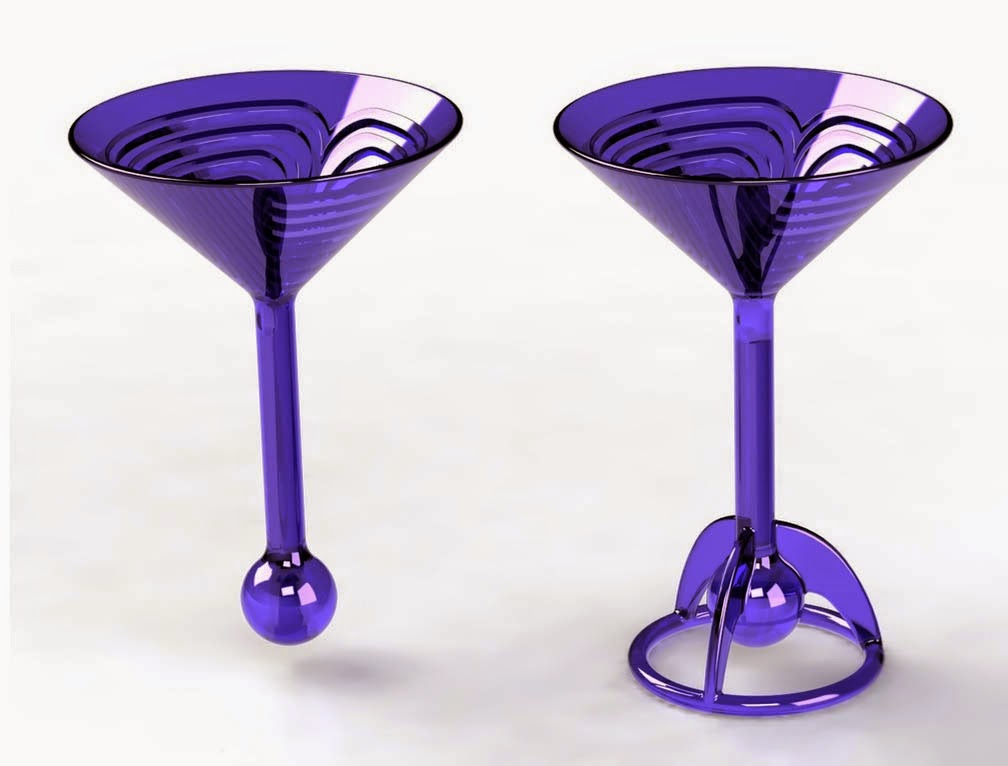
Remember that time you traveled to space and, instead of drinking your alcoholic beverage from a cocktail glass like a gentleman, you had to sip it through a straw from a bag like an animal? Ah the perils of celestial travel, where propriety is abandoned in the name of "utility." Well, fortunately there's a company out there who actually gives a damn about you and your cosmic travails. All three of you. That's right, despite the fact that there are literally 12 trillion better ways to spend money, a company called Cosmic Lifestyle Corp. is seeking funding on Kickstarter for the Zero Gravity Cocktail Project,  an open-top cocktail glass
 that can be used in space. According to their Kickstarter page, astronauts using it would be able to drink from it as if they were on Earth. But the project isn't just about making getting blotto in space more civilized, they also want to "inspire the idea of a future when space hotels are in orbit and settlements are on other planets [where] people can relax and enjoy the experience of a quality drink." Nothing like putting the cart before the horse.

The company is currently seeking an initial investment of $30K to make several 3D-printed prototypes and then test them on parabolic flights, where zero-gravity can be simulated. And though the concept has, according to their page, received support from the Space Frontier Foundation and the Space Tourism Society, as of writing they've only raised a little over $2,000. So apparently the world hasn't gone completely mad. Behind every cloud and all of that.

[H/T Mashable] 

Drones in Insurance: State Farm to launch drones

BLOOMINGTON, Ill., March 17, 2015 /PRNewswire/ — Like a good neighbor, State Farm is there, in the air. State Farm is the first insurer in the United States to receive FAA permission to test Unmanned Aircraft Systems (UAS) for commercial use. The decision provides the insurer the opportunity to research this new technology and potentially deploy it in ways that could benefit customers. State Farm plans to explore the use of unmanned aircraft to assess potential roof damage during the claims process and respond to natural disasters.
“The potential use of UAS provides us one more innovative tool to help State Farm customers recover from the unexpected as quickly and efficiently as possible,” said Wensley Herbert, Operations Vice President – Claims. “We will continue to provide the same personal, good neighbor service State Farm is recognized for, with assistance from these high-tech devices.”
The company plans to move forward with test and development flights. These flights will be conducted at private test sites in theBloomington, Ill., area. Eventually, these test flights will evolve to testing in real-world scenarios. State Farm will strictly adhere to parameters set forth by the FAA.
About State Farm®
State Farm and its affiliates are the largest provider of car insurance in the U.S. In addition to providing auto insurance quotes, their 18,000 agents and more than 65,000 employees serve over 82 million policies and accounts – nearly 80 million auto, home, life, health and commercial policies, and nearly 2 million bank accounts. Commercial auto insurance, along with coverage for renters, business owners, boats and motorcycles, is available. State Farm Mutual Automobile Insurance Company is the parent of the State Farm family of companies. State Farm is ranked No. 41 on the 2014 Fortune 500 list of largest companies. For more information, please visit http://www.statefarm.com.

Комментарии к «Интерстеллар» – кто такие высшие существа?

image

Примечание 0: посвящается выходу фильма на торрентах оптических носителях.

Примечание 1: если вы ещё не смотрели фильм, то в этом переводе есть спойлеры!

Примечание 2: это перевод выдержки из книги Кипа Торна «Наука Интерстеллар». В отрывке обсуждаются существа, которых в оригинале называют «bulk beings». В русском переводе эту фразу никак, насколько я понял, не перевели, да и в фильме их упомянули всего один раз. По смыслу – это существа, эволюционировавшие до высших измерений, т.е. до измерений, больших, чем 4 (3 пространственные + время). Так что я решил перевести название как «высшие существа».


Все персонажи фильма убеждены в существовании высших существ, хотя используют это слово очень редко. Обычно персонажи говорят об этих существах «Они». В начале фильма Амелия Брэнд говорит астронавту Куперу: «Кто бы Они ни были, Они, по-видимому, заботятся о нас. Эта чёрная дыра позволит нам добраться до других звёзд. Она появилась тогда, когда мы в ней нуждались».

Одна из интересных идей Кристофера Нолана состоит в том, что Они – это эволюционировавшие люди. В далёком будущем в их распоряжении оказалось ещё одно пространственное измерение, и они живут во многомерном пространстве. В конце Купер говорит роботу TARS: «Ты не понял? Это не существа. Они – это мы, пытаются помочь, как я пытался помочь Мёрф». TARS отвечает: «Люди не строили этот тессеракт». «Пока нет, — говорит Купер, — но когда-нибудь. Не мы с тобой, но люди, люди, которые эволюционировали за пределы известных нам четырёх измерений».

Двумерная брана и трёхмерное пространство


imageВ 1844 году Эдвин Эббот написал сатирическое произведение Флатландия: Многомерный роман. Хотя эта сатира викторианской эпохи сейчас выглядит старомодной, она сильно связана с Интерстеллар. Рекомендую к прочтению.

Она описывает приключения квадратного существа, живущего в двумерной вселенной Флатландии. Квадрат оказывается в одномерной вселенной Лайнландии, в нуль-мерной вселенной Пойнтландии и в трёхмерной Трёхмерии.

Когда я встретился с Кристофером Ноланом, мы оба с удовольствием отметили, что читали это произведение и оно нам понравилось.

Представьте, что вы – двумерный квадрат, живущий во Флатландии. Это может быть поверхность стола или бумаги, или резиновая мембрана. Я буду по-современному называть её двумерной браной.

Как образованное существо, вы подозреваете о существовании трёхмерного пространства, в котором находится ваша брана, но не уверены в этом. Представьте, что однажды к вам приходит в гости сфера. «Высшее существо».

image

Сперва вы не понимаете, что это высшее существо, но понаблюдав и подумав, вы не находите другого объяснения. Вы наблюдаете следующее: внезапно, без предупреждения и без видимого источника, на вашей бране появляется голубая точка. Она расширяется в голубой круг, который растёт до максимального диаметра, а затем сжимается обратно в точку, и исчезает (левая часть картинки).

Если верить в закон сохранения материи, нельзя создать что-то из ничего. Значит, происшедшее можно объяснить только тем, что изображено в правой части картинки. Трёхмерное существо, сфера, прошла через вашу брану. При этом вы наблюдали её двумерное сечение.

Представьте, что человек из трёх измерений пересекает вашу двумерную брану. Что вы увидите?

Высшие существа из пятого измерения, пересекающие нашу трёхмерную брану


Представьте, что наша вселенная с тремя пространственными и одним временным измерением, находится в пятимерном пространстве (четыре пространственных и одно временное). И там есть живые существа. У них должны быть центр и поверхность. Их поверхность будет состоять из всех точек, в четырёхмерном пространстве, которые находятся на определённом расстоянии от центра – например, 30 сантиметров. Поверхность существа будет иметь три измерения, а внутренности – четыре.

Представьте, что это существо пересекает нашу брану. Что мы увидим? Очевидно, сферические сечения гиперсферы.

image

Из ниоткуда появится точка (1), расширится до трёхмерной сферы (2), которая будет расширяться до максимума (3), затем сжиматься (4), дойдёт до точки (5) и исчезнет.

Можете представить, что мы увидим, если через нашу брану пройдёт четырёхмерный человек? Для этого надо представить, как выглядит четырёхмерный человек, и как выглядят его сечения.

Природа высших существ и их гравитация


Из чего же сделаны высшие существа? Наверняка не из такой же материи, как мы. У атомов три измерения, они могут существовать только в трёх измерениях. Как и субатомные частицы. Как и электрические и магнитные поля и та сила, что держит вместе атомы ядра.

Лучшие учёные умы пытались понять, как материя, силы и поля ведут себя, если наша вселенная – это действительно брана в многомерном пространстве. И пришли к выводу, что все частицы, силы и поля должны быть ограничены нашей браной, за исключением одной силы – гравитации, и тем искажением пространства, которое она создаёт.

В четырёх измерениях могут быть и другие поля и силы, но мы их не можем засечь. Можем только рассуждать и фантазировать – а физики этим и занимаются. Но экспериментальных подтверждений у нас нет. В фильме мы видим такие рассуждения на доске профессора Брэнда.

И скорее всего мы никогда не сможем их увидеть или почувствовать. При проходе высших существ через нашу брану мы не увидим их состав – их сечения будут прозрачными.

С другой стороны, мы почувствуем гравитацию и искривление пространства и времени. К примеру, если в моём желудке появится гиперсфера с достаточно сильным притяжением, мой желудок сожмётся, а мускулы напрягутся, сопротивляясь притяжению.

image

Если сечение многомерного существа появится и исчезнет перед шахматной доской или палитрой, его искривление пространства будет работать как линза, изменяя видимую картинку. Если существу будет вращаться, оно может затянуть пространство в водоворот.

Купер, Брэнд и команда корабля Эндюранс не чувствовала гравитации высших существ и не видела искривления пространства. Это, может быть, мы увидим в следующей части фильма, если она будет. Но старший Купер, летя через измерения закрывающегося тессеракта, достаёт до команды Эндюранс и более молодого себя при помощи гравитации. Брэнд видит и чувствует его присутствие, и думает, что он – это Они.

вторник, 24 марта 2015 г.

Как возникает северное сияние?

Полярное сияние — это свечение верхних слоев атмосферы обладающей магнитосферой планеты вследствие ее взаимодействия с заряженными частицами солнечного ветра.


    17 марта жители средней полосы России могли наблюдать крайне редкое для наших широт событие — северное сияние.
    Что это за явление и как оно возникает? SciShow дает обстоятельный ответ на этот вопрос. Оказывается, все не так и сложно!

    5 Tips for Overcoming Radio Anxiety During Flight Training


    A recent conversation with a friend reminded me that radio anxiety is one of the most-feared parts of flying for student pilots. But it doesn’t have to be. As flight instructors, we often forget what it’s like to feel overwhelmed by radio chatter in a busy airspace. We’ve been doing it for so long that it rolls right off our tongues with ease. But for a new pilot, this type of communication - lightning-speed transmissions between controllers and pilots, peppered with jargon and acronyms everywhere – is a like learning foreign language.
    Communicating with air traffic control is a very common fear for student pilots. Controllers talk fast, and sometimes instructors put a lot of emphasis on doing it “right.” And there’s already so much going on while you’re flying that handling the radios seems like an impossible addition.
    Obviously, the number one priority while flying is safety, and good pilot-controller communication is essential to the safety of flight, which is why it’s emphasized early on in flight training. You do need to learn how to do it right, but it doesn’t have to be a source of anxiety.
    There are ways to overcome radio anxiety easily and after a few flights, you’ll be worrying about other important things, like were to go for your next $100 hamburger. Here are a few inside tips for getting rid of radio anxiety:

    1. Relax: You are going to mess up the radios at first, so just get comfortable with messing up. When you realize that messing up one or two words while talking to the control tower won’t mean the end of the world, you’ll be able to relax a little. Everyone messes up. As long as you get your message across somehow you’ll be just fine.


    2. Don’t get hung up on being perfect: Your instructor will likely tell you to remember certain things, like the “Three W’s” when you’re reporting your position in the pattern. In this case, you’re supposed to say who you are, where you are, and what you’re doing, which sounds easy until you’re multi-tasking while turning from base to final in the pattern. Remember that it doesn’t really matter if you forget one portion of the required radio call- you can always call again. Or, if you're in a towered environment, ATC will ask you for any missing information they might need and everyone will move one.


    3. Don’t worry about embarrassment: ATC deals with new and unfamiliar pilots a lot, and they’ll understand. As far as other pilots, they’re all too busy worried about what they’re going to say to even notice a bad radio call. Early on in your training, your instructor might suggest that you avoid ultra-busy airports until you’ve mastered the radios.


    4. Practice on the ground: Practicing your tower communications on the ground will do wonders for your flight. Grab a buddy and have him or her pretend to be ATC while you “fly” the pattern on the ground.


    5. Listen: Listening from the ground at or near the airport is the best way to learn ATC lingo, phrasing and terminology, including operations specific to your area or airport. Just grab a transceiver (your instructor or FBO might have one you can borrow) and head down to the airport. Sit at the FBO or on the ramp, grab a bite to eat and listen to the radio.
      You’ll hear a few things from the ground that will help with your own radio communications. First, you’ll get a good idea of local procedures and what goes on in general at the airport. Second, you’ll get an idea of the timing of radio calls, which is also important. Specifically, you’ll learn when air traffic controllers do hand-offs, when to contact them when you’re inbound to the airport and what to say upon departure. Finally, you’ll hear other pilots mess up radio calls, which will make you feel better about your own mistakes.


    In the end, the best way to learn is by experience. You have to get your feet wet at some point, so don't be afraid to just jump in and do it. Your first few radio calls will probably be a bit rough, but it only takes a few flights to get the hang of it!

    Дроны против официантов!

    Дроны против официантов!
    Руководство сети ресторанов Timbre в Сингапуре не особенно доверяет представителям вида Homo sapiens. Поэтому заявило о том, что вместо людей в их точках общепита будут работать дроны!
    Дрон в роли официанта
    Жужжащие аппараты компании Infinium Robotics смогут быстро разносить заказы по залам, не будут плевать в еду и скандалить из-за чаевых.

    Вес каждого дрона — около двух килограммов. При этом он способен нести на себе пару бокалов пива или вина или не слишком массивные закуски. Чтобы летающие официанты не врезались в посетителей, все они оснащены инфракрасными датчиками. Впрочем, как ты понимаешь, техника может выйти из строя, так что ждем новостей в стиле «Неисправный официант отрезал туристу голову винтом».


    понедельник, 23 марта 2015 г.

    Boeing patents a force field system to protect military vehicles from explosions

    Boeing is known the world over as an aircraft manufacturer, but it also designs and develops sophisticated defense, satellite and weapon systems. The company’s latest patent seems to be inspired by sci-fi movies: a force to shield vehicles and buildings from explosions.
    This video from PatentYogi shows how Boeing’s system detects shockwaves emanating from nearby bomb explosions and sends out laser pulses to ionize air and absorb the blow.


    While originally developed for use on military vehicles in war zones, the innovation may also aid in protecting ships and aircraft.