Показаны сообщения с ярлыком Air Force Trainer. Показать все сообщения

четверг, 2 апреля 2015 г.

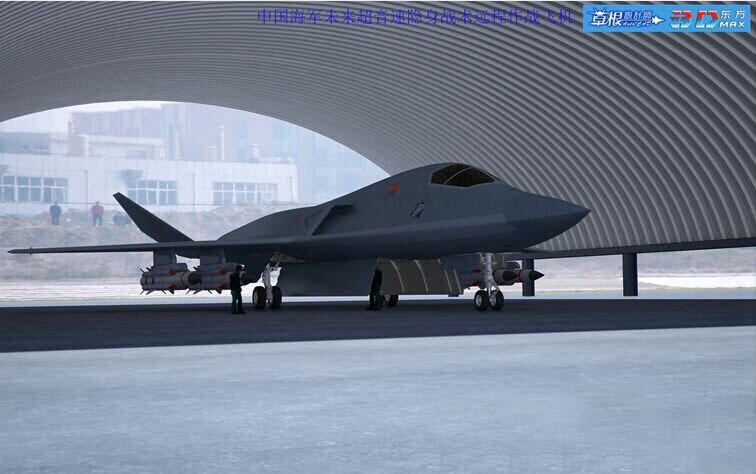
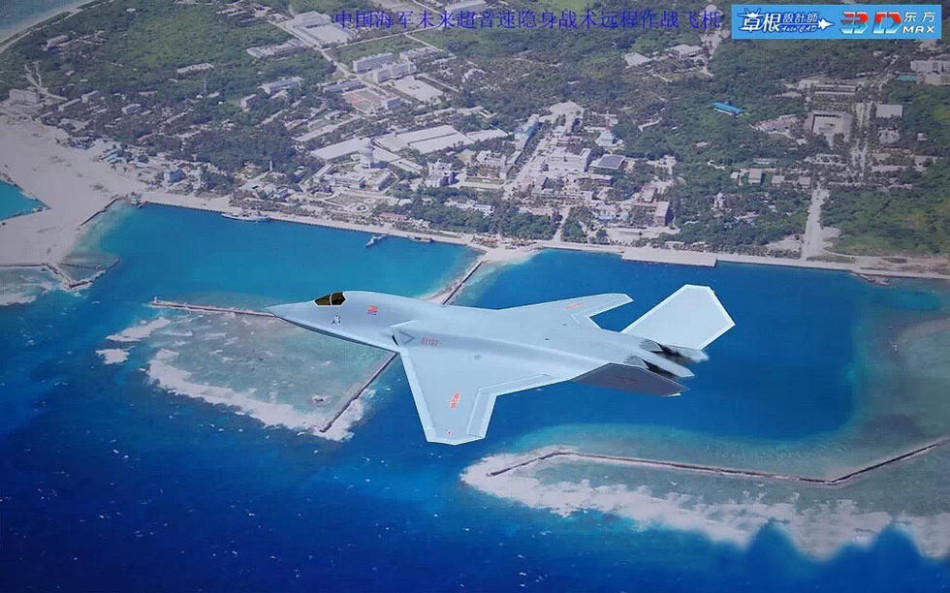
Китай ведет разработку уникального бомбардировщика-невидимки

Если верить порталу defence-blog.com и если эта новость не запоздалая первоапрельская шутка, то Поднебесная хочет иметь в своем арсенале малозаметный фронтовой бомбардировщик. 

Сообщается, что прототип может быть построен к 2025 году и в перспективе новый самолет заменит такие истребители-бомбардировщики как JH-7 Flying Leopard. Максимальная скорость стелс-бомбардировщика составит 1600 км/ч, а его дальность действия превысит 4700 км. Потолок сможет достигать 17 тыс. м. Помимо широкого применения мер, улучшающих малозаметность, примечателен еще один технический аспект. Речь идет о размещении экипажа бок-о-бок. Это решение впервые будет использовано на малозаметных боевых самолетах.
Концепция крылатой машины перекликается с концепцией российского фронтового бомбардировщика Су-34. Судя по всему, новый самолет станет узкоспециализированным бомбардировщиком, имеющим опциональную возможность поражать воздушные цели. В контексте нынешних реалий такой подход видится странным, поскольку современные истребители де-факто являются многофункциональными комплексами, способными выполнять весь спектр боевых задач (как поражение воздушных целей, так и нанесение точечных ударов по земле). Поэтому зачем создавать специализированный фронтовой бомбардировщик, да еще и с чистого листа – неясно.
Ранее США вынашивали похожую идею: на базе истребителя пятого поколения F-22 хотели построить бомбардировщик FB-22. Впоследствии от нее отказались, поскольку почти все функции такой машины смогут выполнять истребители F-22 и F-35, а также беспилотные летательные аппараты.

Заметим, что если фронтовые бомбардировщики (такие как Су-24) уходят в историю, то со стратегической авиацией прощаться пока рано. Как Америка, так и Россия разрабатывают стратегические бомбардировщики нового поколения. Есть сведения, что похожие работы ведет и Китай.

©Defence-blog
©Defence-blog

среда, 1 апреля 2015 г.

How it Works: F-35 Climatic Testing

Within the decade, the F-35 Lightning II will be deployed to all corners of the globe—from the icy mountains of Norway to the scorching desert of Australia—and we must ensure the aircraft can perform in these dynamic environments. To do this, we look no further than a structure straight out of the post-World War II era: the McKinley Climate Testing Laboratory at Eglin Air Force Base, Florida.

Go behind the scenes in the climatic chamber with Lockheed Martin Test Pilot Billie Flynn in this video
The McKinley Climatic Laboratory, known simply as the “climatic chamber,” has been the home of climate testing for every aircraft developed since 1947. It has become a “rite of passage” for all aircraft on their journey to Initial Operating Capability (IOC).
As the F-35 approaches its IOC debut for the U.S. Marine Corps in 2015, it too must be put through the rigors of the climatic chamber. Only this time, the test is being performed differently than ever before.
To accommodate the swiveling engine nozzle and lift-fan system of the Lightning II, a 12-foot high “restraint and support” structure interwoven with a system of ventilation ducts was designed. This apparatus secures the F-35 and allows it to operate at high power in both conventional and Short Takeoff/Vertical Landing (STOVL) mode while inside the building.
Ventilation of the exhaust is vital to maintaining a stable temperature inside the chamber. Conditioned air is constantly pumped in to ensure the pressure in the building is always higher than the pressure inside the ducts surrounding the engine and other openings on the aircraft. This difference in pressure is a safeguard that maintains the jet exhaust is flowing out of the chamber through the ducts, allowing the facility to sustain a constant temperature. 
Water spraying from the ducting at the back of the engine absorbs some sound wave vibrations emitted from the engine that is capable of generating 40,000 pounds of thrust—thereby decreasing decibel levels in the chamber.
Now, it’s time to play Mother Nature.
Heating Things Up
To kick off climatic testing, engine runs are conducted at a precise set of temperatures. Over a series of days, the temperature is steadily and incrementally increased until it reaches the test maximum of 120 degrees. While the chamber itself is set to a pre-determined temperature, additional solar lamps above the aircraft recreate the intense heat of the sun on the surface of the jet.
In reality, air temperature does not remain constant throughout the day—it increases each hour the sun is up, reaching its apex in the late afternoon. In the chamber, engineers recreate the temperature fluctuation of a 24-hour day.
Much like a car bakes in the sun on a summer day, so can the F-35 Lightning. To recreate the environment in which a jet is left outside on the flight line at, say, Marine Corps Air Station Yuma in Arizona, the jet remains powered down in the chamber until it reaches the simulated day’s maximum temperature. Once temperatures peak, the test team fires up the aircraft—much like a pilot would on a typical, sweltering afternoon at Yuma.
Keeping It Cool
In a matter of days, the chamber transitions from a devilishly hot sauna to the Arctic Circle. Outside air is super-cooled using McKinley Lab’s refrigeration system and pushed into the chamber. In increments, the chamber walks its way down to -40 degrees while the jet completes test runs along the way.
At such frigid temperatures, aircraft fluids start to thicken and mechanisms operate slower—all points upon which test engineers keep a watchful eye as the temperatures dip dangerously low.
Successfully completing cold testing is another crucial step in the F-35’s journey towards IOC, because the F-35 would experience this type of environment while operating in Canada or Norway.
Let It Snow
Next, the Lightning II faces its harshest climate yet: a barrage of snow and ice that would have Santa Claus shaking in his boots. 
When the F-35 hurtles through the clouds at high speeds in freezing climates, large pieces of ice can form quickly on the aircraft’s exterior. These heavy chunks of ice may break off and damage the aircraft, errantly fly into the engine or create a Foreign Object Damage (FOD) concern. For this reason, icing is one of the most dangerous elements in climatic testing.
In front of the jet sits a large apparatus composed of three massive cylinders stacked in a pyramid, parallel to the ground. Inside these cylinders are a total of nine ducted fans that blow a huge amount of air through a single funnel in the front, like a giant hairdryer. Attached to the front of this funnel is a spray bar capable of producing “clouds” of various water droplet sizes. 
These droplets are blown toward the plane and freeze upon contact. While the lab cannot generate the precise wind speeds experienced by airborne aircraft, the unique setup inside the chamber is capable of producing sustained wind speeds up to 120 miles per hour—all while spewing precipitation at the F-35.
Snow and ice testing gauges the effectiveness of the aircraft’s Ice Protection System and the ability of the jet to perform in winter weather.
When It Rains, It Pours
For its final test, it is time to take the F-35 into the center of a hurricane—so to speak. To gauge how a Lightning II would hold up sitting uncovered on the flight line at a place such as Eglin AFB, the McKinley Climatic Laboratory is equipped with a system of “rain frames” that drench the jet with steady rainfall.
During rain testing, the F-35 is soaked in rainfall ranging from 1.1 inches per hour, all the way to 3.3 inches per hour. With driving rain inevitably comes gusty wind. Following the steady soak, a spray bar is placed at various positions around the aircraft. Behind this pole is a large industrial fan that generates sustained winds of 44 miles per hour in the direction of the spray bar and the F-35—creating a tropical storm-like environment that drenches the jet at that particular angle.
Whether soaring across the equator or over the tip of the northern hemisphere, the F-35 Lightning II must be ready to encounter any environment in its pursuit to defend our skies. The McKinley Climatic Laboratory helps us ensure we will be ready—no matter what Mother Nature brings.

US Army Leaders Make Case for AMPV Decision

HuntaZeitung — US Army officials shot down the possibility for a wheeled ambulance variant of the armored multipurpose vehicle (AMPV), just the latest chapter in a drama over the vehicle between industry, the Army and Capitol Hill.
In December, the US Army awarded a contract worth $1.2 billion to BAE Systems to begin building the AMPV. BAE was the only contractor still in the running after General Dynamics Land Systems pulled out of the competition in May, complaining that the Army's requirements unfairly favored the tracked Bradley fighting vehicle derivative that BAE was submitting.
BAE is signed to deliver 29 vehicles in five variants in a 52-month engineering, manufacturing and development phase that will lead to a contract to replace all 2,897 M113 vehicles in the Army's armored brigade combat teams (ABCTs). However, GD lobbied the Hill get its eight-wheeled Stryker vehicle in the running for an ambulance variant and another 1,922 M113s in use supporting echelons above brigade (EAB) the service eventually wants to replace.
In a brief at an Association of the US Army convention here, acquisitions officials strove to put the matter to rest, outlining why the BAE's tracked vehicle provided the best mobility, as compared with the Stryker on a variety of terrain, particularly for an ABCT, and defending the program's fairness.
BAE Systems received an engineering, manufacturing and development contract for the US Army's Armored Multi-Purpose Vehicle program.(Photo: BAE Systems)
"The AMPV was about meeting the requirements, there was never a specification for a wheeled or tracked vehicle," said Col. Michael Milner, the AMPV project manager. "We provided industry a list of requirements, industry was able to provide feedback and eventually was issued an RFP [request for proposals] on those requirements. The proposal selected did happen to be a tracked vehicle."
Brig. Gen. David Bassett, the Army's program executive officer for Ground Combat Systems, said Stryker ambulances were "wonderful in their intended formations," but an ABCT's ambulances need to be able to go wherever the brigade's other vehicles go to retrieve wounded soldiers.
"We want to make sure we can get an ambulance to that point of need," Bassett said. "The arguments about the mobility being roughly equivalent are using analytical methods that don't represent the true traffic-ability of a wheeled versus a tracked solution."
The medical evacuation variant transports medics to troops on the front line, and evacuate them to a treatment variant, which is used to carry equipment for a battalion aid station.
Bassett said officials wanted to provide the best vehicle under a particular price, and "need to leverage" common components with the Bradley.
The aging M113 was terminated in 2007 because of it lacked required armor and was unable to accommodate modern electronics. The AMPV, with 78 percent more space and two, 400-amp generators, would include mortar carrier, mission command, general purpose, medical evacuation and medical treatment variants, all on a similar chassis.
Milner touted a common drive train, power plant, electronics and underbody across the five variants, all mature systems that would speed production and fielding. The drive train and suspension are common to the Bradley and the Paladin Integrated Management, a self-propelled howitzer.
The plan is to go to a preliminary design review this summer and a critical design review next summer, with first delivery in late 2016. From there, intermittent tests will lead to the limited user tests in late 2018. The fielding is not going to be complete until the mid-2020s.
The matter of wheeled versus tracked vehicles is not entirely settled, as other studies are ongoing.
The Army released one study to the House Armed Services Committee last month, and it found that the other units in the brigade had similar requirements to the AMPV, "but that's not to say those will be the requirements."
The Pentagon's Cost Assessment and Program Evaluation office is expected to complete its study soon that concentrates on medical variants, Milner said.
The Army is also conducting a formal analysis of alternatives for echelons above brigade at the behest of the Senate Appropriations Committee tat is expected to wrap in 2016.

воскресенье, 29 марта 2015 г.

Army looking to acquire mini-drones

The Swiss army is exploring the possibility of acquiring mini-drones for the infantry by 2020. A budget of CHF8 million has been set aside.

The miniature drones will be used for close-proximity surveillance according to Armasuisse, confirming information published in the Blick newspaper on Saturday. A proposal is currently being prepared to test various models with a view to eventually acquiring them in 2019-20, revealed Armasuisse  spokesperson Kaj-Gunnar Sievert.
These mini-drones offer the capability of observing the enemy over long distances or across barriers like a hill or building. The models and specifications that will be tested were not disclosed.
There are several types of such unmanned craft, including quadricopters or mini-planes that can be fitted with infrared cameras. Most of them can be hand-launched.
Switzerland already posseses much larger surveillance drones to support the army with intelligence gathering. They are used for policing, border patrols, and assessment in case of disasters. The government’s recent attempts to renew its fleet of drones with “battle-tested” models produced by Israeli companies raised eyebrows. The budget for six such drones amounted to CHF250 million

Why military wants to spend billions on new Air Force One

(Photo: AP)
Boeing 747 planes become Air Force One when the commander in chief is aboard. The current planes are getting old, and the Pentagon wants to buy new ones. CBS News' Mark Albert reports from behind the scenes on how for the first time the military may buy three 747s to replace the current two.
Air Force One is the most recognizable aircraft in the world: six stories tall, two-thirds of a football field long and carrying immeasurable prestige.
More than "Hail to the Chief," more than the ubiquitous Secret Service agents, even more than the famous seal, there is no more identifiable symbol of the mobile presidency than Air Force One.
"It has come to represent the power of the American presidency, the reach of the American presidency," author Ken Walsh said. "It's come to symbolize American technology and America's technological prowess."
Walsh wrote a book on Air Force One and has covered the past five presidents for U.S. News and World Report. He's flown on Air Force One about 300 times, which begs the question, what's it like to fly on the presidential aircraft?
"For a president, it's fabulous," Walsh said with a laugh. "When they left office, the four who've left office say the thing they miss the most is Air Force One."
But under their polished exterior, the two aircraft that commonly serve as Air Force One are aging, now a quarter-century old. Even though both Boeing 747-200s have only flown a fraction as much as a commercial 747 of the same age, the Air Force says it's time for a new generation of presidential wings.
"We've got a pretty good size team working on it," Air Force Col. Amy McCain said.
McCain is in charge of ordering the new Air Force One.
"The current airplane was fielded in 1991," McCain said. "It's the only 747-200 left in the United States that is flying. So it costs a lot more time and money to keep that airplane flying than it used to. It's actually cheaper in the long run to replace it."
McCain's team has grown from 20 people to 80 in just the past year. It will soon expand to 100.
In January, the Air Force announced its intention to use Boeing's 747-8 airframe.
The long-range, wide-body aircraft is made in Everett, Washington. It comes with a longer fuselage, greater wing span and new engines and avionics. It will be heavily modified with all of the latest technological and security gear. But this symbol of America doesn't come cheap.
Updated budget documents show its request to Congress starts with $102 million this year, and the numbers quickly gain altitude to more than $3 billion in total in the next five years. And that's not counting the final three years of the project.
Some say that the aircraft does not need to be replaced and that the taxpayers simply can't afford to buy a new presidential plane.
"The top priority is an affordable aircraft that will meet the presidential requirements," McCain said. "We're buying up to three. It depends on all the availability of having two airplanes available for the president at any one time."
If the deal takes off, the current Air Force One will likely land in the National Museum of the U.S. Air Force in Dayton, Ohio, home to nine presidential aircraft.
The museum's historian, Jeff Underwood, said the history of the presidential aircraft is filled with triumph and turbulence.
Franklin Roosevelt was the first to fly while in office. The plane the president took to Yalta in 1945 had an electric-powered elevator.
The four-engine Douglas plane, code-named "The Sacred Cow," was modified for the president, who was stricken by polio at age 39.
Roosevelt flew on the plane only once before his death. Harry Truman then used it, signing the act that created the Air Force.
The Boeing 707 that took the first American president to China is at the museum. It carried eight presidents over 36 years.
Jackie Kennedy approved the now-iconic blue and white design still in use today.
The 707 also flew the Kennedys to Dallas and President Kennedy's successor back to Washington.
The original log book from that date shows the one flight with two presidents, after Lyndon Johnson took the oath of office in a packed, sweltering cabin.
The headwinds of history buffeted George W. Bush aboard Air Force One on 9/11 as the plane became an airborne refuge after the terror attacks.
In 70 years of presidential flight, Underwood said the unique set of aircraft we now know as the Air Force One has taken the country to new heights.
"This is not just the president's plane," Underwood said. "This is the plane that belongs to the people of the United States. When you look on the side of the airplane, it tells you, United States of America. This is a symbol of the United States, and we are the people of the United States."
The Air Force hopes to sign the first contract with Boeing later this year for the next Air Force One. The goal is to have the new 747s flying the president eight years from now in 2023.

Loss of Control In Flight, Runway Excursions Are Top Bizav Safety Concerns

Loss of control in flight (LOCI) and runway excursions were the uppermost concerns in the NBAAsafety committee’s third annual list of top safety focus areas, released today. In addition, the committee highlighted several other safety hazards, including airspace complexities; birds and wildlife; distraction and technology management; fatigue; ground handling collisions; procedural non-compliance; and single-pilot task saturation.
The list is intended to promote safety-focused discussion and advocacy throughout the business aviation industry, as well as to help the safety committee prioritize NBAA’s resources to help improve safety industry-wide. In developing this year’s list, the committee took a data-driven approach to determine the biggest risks. Thus, the top safety priorities were identified based on an objective analysis that combined data trends, survey results and qualitative input from other NBAAcommittees, industry and regulatory partners and members.
The results of our data-driven approach to identifying the biggest opportunities for improving business aviation safety are definitive,” said committee chairman Steve Charbonneau. “Loss of control in flight and runway excursions are the deadliest and most frequent business aviation accidents, and also of highest concern to NBAA members. The association is committed to working with industry partners and will dedicate significant resources to develop tools and programs designed to help operators mitigate these risks.”
In the last decade, no type of accident has caused more commercial and business aviation fatalities than LOCINBAA noted. The NTSB also targeted the issue on its 2015 “Most Wanted” list of safety improvements, citing it as a possible factor in more than 40 percent of fixed-wing general aviation accidents from 2001 to 2011. Compounding business aviation’s challenge in addressing LOCI is the sector’s wide range of aircraft types and operating parameters, which work against any single solution for reducing LOCI occurrences.
According to the report, runway excursions are the most common type of business aviation accident. Despite efforts to reduce the runway excursion rate, the frequency of this type of accident has changed little over the last decade, hovering around 3.6 per one million flights—some 60 percent higher than the corresponding commercial aviation rate. “While runway excursions are often survivable, they are also preventable, based on well identified risk factors, aircraft performance considerations and recommended defenses, making this type of mishap a logical target of a focused risk-reduction effort,” NBAA said.
Our analysis elevated the hazard list items as issues that all operators should be vigilant about in their day-to-day operations,” Charbonneau said. “The safety committee is committed to providing information, resources and tools to help the industry mitigate these hazards, and we will be introducing these products throughout the year.”
In developing its 2015 safety advocacy strategy, the safety committee also identified five basic safety elements—dubbed “foundations for safety”—that operators need to support. These include professionalism, safety leadership, risk management, fitness for duty and technical excellence. The committee said each is critically important to address the complex business aviation environment and should form part of an overall systematic approach to safety risk management.
The foundations for safety should be seen as exactly that: the base that supports all meaningful, beneficial safety efforts,” Charbonneau said. “While NBAA is committed to providing tools and resources to help operators strengthen these foundations and mitigate risk in the areas we’ve identified, we urge everyone to take steps today and examine how they can improve safety in their operations. The most effective safety efforts are proactive. Identifying and acknowledging the risks in your operations is the first step in preventing the next accident.”

суббота, 28 марта 2015 г.

Pentagon Finds Air Force Is Spending Billions on Drones It Doesn't Need

Internal watchdog report obtained by Pentagon has questioned the air force’s increased spending on drones, suggesting it is a waste of money


A Reaper drone.
 A Reaper drone. Photograph: SWNS
The Pentagon’s internal watchdog has questioned the air force’s need for 46 armed Reaper drones, and suggested the flying service is wasting $8.8bn on superfluous aircraft.
As purchases of General Atomics’s MQ-9 Reaper ballooned from 60 aircraft in 2007 to the current 401, air force officials did not justify the need for an expanding drone fleet, the Pentagon said.
During that time, costs for purchasing one of the signature counter-terrorism weapons of Barack Obama’s presidency increased by 934%, from $1.1bn to more than $11.4bn, according to a declassified September report by the Pentagon inspector general. Purchasing costs are a fraction of what the drones cost to operate and maintain over their time in service: in 2012, the Pentagon estimated the total costs for them at $76.8bn.
The Guardian obtained a copy of the inspector general’s report under the Freedom of Information Act.
Responding to heavy demand for additional aerial intelligence from troops deployed in Afghanistan, Iraq and elsewhere, the former defense secretary Leon Panetta in 2011 ordered the air force to buy sufficient drones to perform 65 combat air patrols, missions that require up to four aircraft to observe a target for nearly 24 hours.
But the air force’s air combat command “did not conduct and maintain consistent, complete and verifiable analyses for determining the necessary MQ-9 procurement quantity”, the inspector general found. Combing through insufficient or incorrect air force analyses, Pentagon investigators found that the officials “could not provide the underlying support for aircraft quantity determinations” and sidestepped a bureaucratic process for determining needed capabilities.
Military officers, however, have complained that expanding missions have overtaxed the drone fleet. In November, anonymous officials told the Daily Beast a drone shortage for surveillance and attack missions against the Islamic State (Isis) contributed to an intelligence shortfall against a premier US battlefield target.
Pentagon inspectors found that the air force’s inability to justify its continuing Reaper purchases risks wasting $2.5bn for 13 mission-ready drones; $2.1bn for 11 training drones; $958m for five test drones; $766m for four air national guard drones; and $1.7bn for nine attrition-reserve drones.
The per-cost waste of the questionable drone purchases works out to roughly $192m for each of the 46 Reapers the inspector general was unable to justify buying.
The air combat command’s director of plans said the Pentagon study significantly overstated the potential waste costs, pegging it at $593.4m for 46 Reapers instead of nearly $9bn, and underestimated the stress on the air force to provide sufficient drones for commanders.
“We are concerned that your report does not highlight these dynamic characteristics of an MQ-9 program that evolved during a period of significant conflict to meet warfighter needs at OSD [Office of the Secretary of Defense] direction,” Major General Scott J Zobrist wrote to the inspector general in August.
The inspector general replied that it included operational and support costs in its estimate, commensurate with air force acquisition data for the Reaper, to account for the discrepancy.
While not conceding that the air force does not need the 46 Reapers, Zobrist directed his staff to incorporate the inspector general’s criticisms “in our ongoing MQ-9 cost and capability ISR [intelligence, surveillance and reconnaissance] gap study”, due in March 2015. That study addresses the inspector general’s chief recommendation for the Reaper purchases.
After the inspector general released an unclassified synopsis of the report in September, the air force claimed the watchdog relied on outdated, year-old information.
“The air force is only buying 346 aircraft, 55 fewer than the 401 figure contained in the report and we’ve only received about half that number. The projected total Reaper fleet of 346 is far less the service had originally estimated prior to sequestration,” a three-star air force general told the aviation website FlightGlobal.
A different senior air force official, Major General John Winters, agreed with the inspector general that the Air Force Requirements Oversight Office “should validate necessary MQ-9 quantities and costs in an updated requirements document”

Astronauts Scott Kelly, Mikhail Kornienko begin year in space

Scientists to learn more how living in microgravity environment 

affects human body

Scott Kelly and Mikhail Kornienko began their marathon mission with a Soyuz rocket launch from Kazakhstan.
Scott Kelly and Mikhail Kornienko began their marathon mission with a Soyuz rocket launch from Kazakhstan. (Bill Stafford/NASA)


Two Russians and an American floated into the International Space Station on Saturday, beginning what is to be a year away from Earth for two of them.
Mikhail Kornienko and Scott Kelly are to spend 342 days aboard the orbiting laboratory, about twice as long as a standard mission on the station. Russia's Gennady Padalka is beginning a six-month stay.
The three astronauts entered the station about eight hours after launching from Russia's manned space facility in Kazakhstan. They were embraced by American Terry Virts and Russia's Anton Shkaplerov who along with Italian Samantha Cristoforetti have been aboard since late November.
The trip is NASA's first attempt at a one-year spaceflight; four Russians have spent a year or more in space, all on the Soviet-built Mir space station.

Preparing for mission to Mars

The stay is aimed at measuring the effects of a prolonged period of weightlessness on the human body, a step toward possible missions to Mars or beyond.
Kelly's identical twin Mark, a retired astronaut, agreed to take part in many of the same medical experiments as his orbiting sibling to help scientists see how a body in space compares with its genetic double on Earth. They are 51.
APTOPIX Kazakhstan Russia Space
The Soyuz-FG rocket, carrying a new crew to the International Space Station, blasts off at the Russian-leased Baikonur cosmodrome in Kazakhstan, on Friday, March 28, 2015. The Russian rocket was carrying U.S. astronaut Scott Kelly, Russian cosmonauts Gennady Padalka, and Mikhail Korniyenko. (Dmitry Lovetsky/AP)
Kelly and Kornienko, 54, will remain on board until next March. During that time, they will undergo extensive medical experiments, and prepare the station for the anticipated 2017 arrival of new U.S. commercial crew capsules. That means a series of spacewalks for Kelly, which will be his first.
The two men also will oversee the comings and goings of numerous cargo ships, as well as other Russian-launched space crews and an expected September visit from singer Sarah Brightman on a "space tourist" trip.
Doctors are eager to learn what happens to Kelly and Kornienko once they surpass the usual six-month stay for space station residents.
Scientists already know about certain physiological effects possible with those missions. They include:
  • Exposure to radiation.
  • Weakening bones and muscles.
  • Changes to immunity.
  • Pressure on the brain and eyes.
Bones and muscles weaken because of weightlessness. Body fluids shift into the head when gravity is absent, putting pressure on the brain and the eyes, impairing vision for some astronauts in space.
SPACE-STATION
NASA astronaut Scott Kelly walks after donning his space suit at the Baikonur cosmodrome on Friday, before blasting off in the Soyuz TMA-16M spacecraft from Kazakhstan. (Maxim Zmeyev/Reuters)
The yearlong stint will allow doctors to assess whether such conditions are aggravated by a long spell in space or whether they reach a point of stasis or even taper off.
As space officials look to longer missions, the International Space Station's future appears ensured until at least 2024.
Last year, as tensions between Russia and the United States grew amid the dispute over Russia's role in Ukraine, Deputy Prime Minister Dmitry Rogozin had said Moscow aimed to exit the project in 2020.
But Russian space agency director Igor Komarov told a post-launch news conference in Baikonur that his agency and NASA have agreed to continue using the station until 2024.
In addition, "Roscosmos and NASA will work on a program for a future orbiting station. We will think about discuss joint projects," he said. Just last month, Roscosmos said it foresaw creating a Russian station for use after 2024.
NASA has never flown anyone longer than seven consecutive months. The Russians hold the world record of 14 months in space, set by Valery Polyakov aboard the former Mir space station in 1994-95. Several other Russians spent between eight and 12 months at Mir. All but one of those long-timers are still alive.

Emotional impact of living in space

A year in space will carry not only physical challenges, but emotional ones as well.
A day before the launch, Kornienko said he would long for the sights of nature. Even on his mission in 2010, which was half as long, he said he had asked to be sent a calendar with photos of rivers and woods.
Kelly said he thought one of the biggest challenges would be to pace himself mentally so he could remain energetic during the year aboard the laboratory.
But he joked that he wouldn't miss his sibling.
"I've gone longer without seeing him, and it was great," he said.

Bombardier reveals another CSeries delay pushing delivery to 2016

Bombardier is currently flight testing the CS300, the larger of its two new jets that it hopes to have certified for customers by the end of this year.
Bombardier is currently flight testing the CS300, the larger of its two new jets that it hopes to have certified for customers by the end of this year. (Bombardier)
Another day, another dollar, another CSeries delay.
Bombardier revealed for the first time on Friday that the first deliveries of its CSeries jet to customers officially won't happen until 2016 at the earliest. That's more than three years after the jets were supposed to be available under their original timeline.
The Montreal-based aerospace company has gotten cagey in recent months about timelines for the closely watched (and oft-delayed) project, but had warned last month that more delays might be forthcoming.
After an investor meeting in Montreal, the company's new CEO told reporters it is sticking to a timeframe of getting regulatory certification completed by the end of this year. But delivering the planes to customers so they can start using them will happen some time after that.
"With certification of the program planned for the end of 2015, you don’t do a delivery before the start of the next year anyway," recently minted CEO Alain Bellemare was quoted by Bloomberg as saying Friday.
That was enough to send the stock price down a couple of cents to $2.49 on the TSX on Friday.
As recently as last September, the company said delivery plans "remain on track for the second half of 2015."
Right now, the company has firm orders for 243 of the new planes. But a number of customers have expressed concerns and in at least one case, lost interest in the plane as the delays mounted. 
The head of Qatar Airways said at an airline conference last monththat his company was tired of waiting for the new planes, and had stopped considering ordering any.
The CSeries is seen as key to Bombardier's future as it will be the company's entrant in a growing market for smaller planes that can travel longer distances with better fuel efficiency.
In addition to being about three years behind schedule, the price tag for the project has also grown by $2 billion from what was originally forecast to $5.4 billion US.

Active Sidesticks: A New Way to Fly


The Gulfstream Symmetry Flight Deck, with BAE Systems' Active Inceptors, in the new G500/G600.  Photo: Gulfstream Aerospace
The Gulfstream Symmetry Flight Deck, with BAE Systems’ Active Inceptors/Sidesticks, in the new G500/G600. Photo: Gulfstream Aerospace
Pilots flying the upcoming Gulfstream G500 and G600 business jets will control their planes with an advanced version of the ubiquitous sidestick. In the first civil-aircraft installation of the technology, BAE Systems’ “Active Inceptor System,” not only provides pilots with tactile feedback, but the pilot’s and co-pilot’s sticks will be electronically coupled. The stick movements made by one pilot, or the autopilot, will be seen and felt by the other. In case you’re wondering, BAE uses the word “inceptor,” to describe “the controls that pilots use to direct and maneuver the aircraft.”
Gulfstream G500, which rolled out mid-October, 2014. Photo: Gulfstream
The vast majority of aircraft, big and small, have mechanical connections between the pilot’s stick, or yoke, and the flight control surfaces – the ailerons for roll, elevator for pitch, and the rudder for yaw. When a pilot moves the yoke, not only will the linked co-pilot’s yoke move, but the pilot will feel the response of the control surfaces. In flight training, an instructor will say, “Follow me along on the controls,” and the student will see what the instructor is doing by watching the control wheel in front of her, and feel the feedback from the plane. It’s a useful and important process in learning how to fly.
Decades ago, beginning with Concorde, fly-by-wire (FBW) flight control systems began appearing in large, commercial aircraft. Simply, FBW replaces a mechanical connection from the cockpit with an electronic one. The pilot commands a roll by moving the stick, which is translated into a digital signal, sent by wire to an actuator attached to the aileron, which then moves. All Airbus jets from the A320 to the A380 are full FBW, as are Boeing’s 777 and 787. With FBW, flight system engineers can develop software that adapts to different phases of flight, along with flight envelope protections. In theory, the plane can protect itself, and its passengers, from extreme situations or pilot inputs.
The two airframers went down different paths in developing the pilots’ FBW control system.After all, with FBW, any kind of digital input device could be used to fly the plane, perhaps even an Xbox or Playstation controller. The pilots are essentially “flying” the FBW software installed in the flight control computers, which interpret the control inputs and send the signals on. So, Boeing decided to maintain the legacy of linked control columns and yokes, and that’s what you’ll see in a 777 or 787 cockpit. In those planes, a pilot can see the controls move, whether it’s the other pilot or the autopilot flying. Airbus went a different route, and opened up the cockpit by using sidesticks, mounted just below the side windows, beside each pilots’ seat.
Gulfstream G500/G600 Active Sidestick Photo: Gulfstream Aerospace
Gulfstream G500/G600 BAE Systems Active Sidestick. Photo: Gulfstream Aerospace
The Airbus sidesticks, and those in other similar sidestick equipped FBW aircraft are passive.The pilots don’t get any feedback, and the two sticks aren’t linked. The sticks don’t move when the autopilot is flying, either. And with millions and millions andmillions of safe, sidestick flight hours, it’s clear that this is a technology that works. But commercial pilots will often be in the Boeing-yoke or Airbus-sidestick camp, with a major preference for the FBW philosophy, design, and control of one over the other.
Much has been written, of late, about pilot training and the handling of in-flight emergencies, such as in the tragic crashes of AF447 and AirAsia 8501. Some believe that passive sidesticks don’t communicate enough information to the crew. Others point to the programming, complexity, and functionality of FBW software as a problem. But at the end of the day, doesn’t it just come down to the ability of the flight crew to understand the systems and control the aircraft? Or perhaps the lack of ability, as shown by the crew of Colgan 3407, who stalled a non-FBW, yoke-equipped Bombardier Q400 into the ground in Buffalo, NY.
Gulfstream clearly believes in FBW technology, and with the new BAE system, the G500 and G600 are the first sidestick-controlled planes in the fleet. As the company says in its brochure, “Pilots will be drawn to the active control sidesticks. The controls replace the traditional pedestal mounted yoke, and provide increased visibility and improved pilot comfort.” Gulfstream has combined the BAE Active Inceptors and flight display flat-panel, touch-screen technology into its Symmetry Flight Deck, showcasing the company’s “Intelligence-by-Wire,” integrated flight control system. BAE’s Active Inceptor System is already flying in military applications, such as the F-35 Lightning II, and UH-60 and CH-53K helicopters. The system was also chosen for the Embraer KC-390 airlifter, which recently had its first flight.
Now there’s a third group for pilots to join – the Gulfstream/BAE Active Sidestick camp. I think there will be lineups to get in.

Американские военные создадут продвинутую альтернативу GPS

Агентство передовых оборонных исследований США (DARPA) сообщило, что начало разработку новой системы глобального позиционирования, которая должна прийти на замену традиционного GPS. Технология будет более стабильной, надежной и энергоэффективной.
Современная технология GPS работает не идеально - зачастую пользователи сталкиваются с неверным определением местоположения, связанным с плохим сигналом со спутника. И если для обычных людей это, чаще всего, не является большой проблемой, то во время ведения боевых действий подобные "зависания" могут привести к критическим последствиям. 
Новая технология, созданная DARPA, позволит избежать проблем, связанных с радиопомехами, "мертвыми" зонами и другие неполадками. Высокоточная навигация нового поколения будет использовать сразу нескольких систем определения положения. Во-первых, будет применятся самокалибрующие измерители, которые будут отслеживать перемещения, произведенные после последнего подключения к спутнку. Например, после последнего подключения к GPS автомобиль переместился на 2 километра в область, в которой нет сигнала, однако автономная система определения перемещений точно определяет местонахождения, отталкиваясь от последней зарегистрированной точки. 
Другой перспективной разработкой является система ASPN, которая позволяет определять местоположение за счет всех доступных радиосигналов - телевизионных, радио, сотовой сети и даже далеких разрядов молний. Подобные наработки могут пригодится не только во время военных действий, но и для улучшения потребительской электроники. Система автономного позиционирования позволит смартфонам намного реже подключаться к спутникам, что сэкономит большое количество энергии. На текущий момент спутниковая навигация является одним из самых энергозатратных режимов работы для современных гаджетов.
Источник: Engadget

четверг, 26 марта 2015 г.

Авиакатастрофа на Волыни: самолет упал на жилой дом, есть жертвы

В украинском селе Луч под Луцком разбился Ан-2, загруженный контрабандными белорусскими сигаретами. Пилот погиб.
Авиакатастрофа на Волыни произошла сегодня ночью. Самолет «АН-2» упал, задев частный дом. Вследствие произошедшего погиб пилот, передает Joinfo.ua со ссылкой на пресс-службу ГСЧС Украины.
«В с. Луч Луцкого района в 00 ч. 40 мин. 26 марта пилот самолета «АН-2» (осуществлял несанкционированный полет), снизив самолет с опасной высоты, задел крышу частного жилого дома, в результате чего самолет упал на дорогу в селе и загорелся. Погиб пилот», – сказано в сообщении.
По словам спасателей, в 1 ч. 20 мин. подразделениями ГСЧС Украины пожар ликвидирован. Причина падения устанавливается.


Как рассказывают очевидцы, самолет взлетел с импровизированной взлетной полосы, которая находится вблизи места аварии на поле. В воздухе пилот развернул машину и пытался сесть на место взлета, но самолет стал терять высоту и упал на улицу.

Любопытно, что жители деревни давно знали о наличии самолета и использовании его для контрабанды. Машина раньше работала для разбрасывания удобрений на полях, однако ее выкупили и решили использовать для контрабанды.

Этот полет был далеко не первым, поскольку жители Луча и раньше слышали гул двигателя. Они убеждены, что сигареты должны были везти для продажи в Польшу.

среда, 25 марта 2015 г.

In Global Exports, Smaller Nations Seek Edge

Widespread growth in global arms exports may point to heightened competition for sales in the future as more countries develop increasingly sophisticated defense industries, analysts said.
The US and Russia remain the dominant sellers, accounting for more than half of global sales between 2010 and 2014, according to figures released last week by the Stockholm International Peace Research Institute (SIPRI). But other countries are driving the overall growth in arms exports, which grew by 16 percent globally compared with the period between 2005 and 2009, analysts said.
"There is competition coming from other parts of the world now. China is the most visible [example], but increasingly you have capabilities being developed in other parts of the world," said Jon Barney, managing director at Avascent, a strategy and management consulting firm. "It's a rising tide, and it's game-changing across the sector."
After the US, Russia and China, European countries — Germany, France, the UK, Spain, Italy and Ukraine — and Israel round out the top 10 arms exporters. China experienced the largest growth in exports, up 143 percent from the previous period, while Germany's exports dropped by 43 percent, dropping it out of third place.
Traditionally, China has produced very low-cost, low-tech systems, often copied from Russian models, said Philip Finnegan, director of corporate analysis at Teal Group. At a time when US defense spending has been relatively flat, China's defense budget has grown, and the investment is beginning to pay dividends, he said.
"They're coming up, they're really moving up the value chain and sophistication level," Finnegan said.

Closing the technology gap with the US to produce higher quality products is one way that emerging producers are making themselves more attractive to buyers. Sellers in the same region may be more convenient, and buying from countries besides the US and Russia often comes without the geopolitical and ideological strings attached.
And even traditional alliances may become less influential in the future, said Remy Nathan, vice president of international affairs at the Aerospace Industries Association.
"There are certain things that are just unlikely to occur," such as the UK buying a Chinese military system, Nathan said. "But having said that, I'm not taking it for granted that traditional customers of US systems are going to remain those customers."
The market — the countries that need things, their ability to afford them, their desire to buy them — is changing, Nathan said. A program that is 80 percent effective but costs a fraction of one that is 90 or 95 percent effective will often win out, he said.
Countries not in the top 10 are building up their programs by developing niche products, Finnegan said. For example, Turkey has made strides with its Anka UAV, a medium-altitude/long-endurance vehicle under development by Turkish Aerospace Industries. The KC-390, a twin-engine cargo plane manufactured by Brazil's Embraer, may someday provide competition for American made C-130s.
"There's an ambition to develop broad industry, but it tends to be a niche approach," he said.
Analysts said that while the US, Russia and China are likely to remain the top three exporters, European countries are the most vulnerable to lose their market share to the emerging upstarts.
Byron Callan, a defense market analyst with Capital Alpha Partners, said that restrained defense budgets for European producers, including the UK, Germany, Spain and Italy, have hurt their prospects.
"They've kind of starved their industry of research and development, and it's not clear how commercially competitive some of their next generation stuff is," he said. "They show up on this list right now, but if they're people who get bumped, it's going to be continental European countries."
But it's hard to look back at sales figures and see what disruptions and perceptions of political instability will affect the market in the future, Callan said.
"Some of the most disruptive things that are happening aren't coming from anybody on that list," he said. Non-state actors such as Boko Haram and the Islamic State can cause mayhem with light infantry weapons.
"The instability isn't coming from main battle tanks and advanced aircraft, but groups that can get their hands on large stocks of weapons and ammunition," Callan said.