Показаны сообщения с ярлыком France. Показать все сообщения

пятница, 17 апреля 2015 г.

Катастрофа A320 авиакомпании Germanwings: траур и уроки

В Кёльнском соборе 17 апреля пройдет экуменическая траурная служба в память о жертвах катастрофы рейса 4U9525 авиакомпании Germanwings. Какие уроки извлекли из этой трагедии?
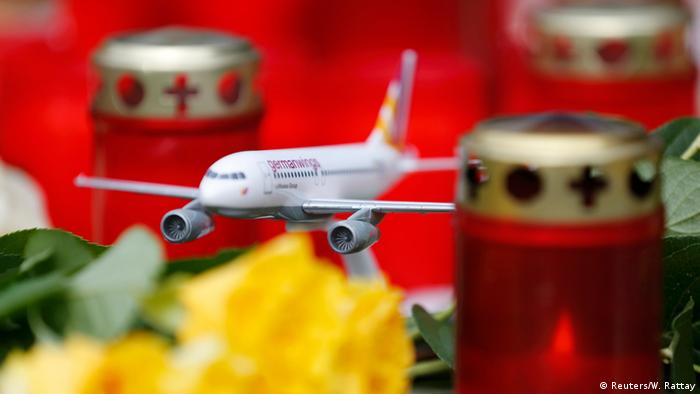
Свечи в память о погибших в авиакатастрофе и модель самолета Germanwings
24 марта во французских Альпах разбился самолет немецкой авиакомпании Germanwings, выполнявший рейс 4U9525 из Барселоны в Дюссельдорф. Погибли 150 человек. Большинство жертв - граждане Германии. Среди погибших - пассажиры из 21 страны. Особую утрату понес немецкий городок Хальтерн: катастрофа унесла жизни 16 школьников и двух учительниц местной гимназии.
Работы на месте трагедии продолжаются. Но расшифровка записей черных ящиков самолета рассеяла все сомнения: причиной катастрофы были не технические неполадки и не теракт, а сознательные действия второго пилота Андреаса Л. В Германии до сих пор не утихают споры о том, как предотвратить подобные трагедии. Однако на первом плане - забота о родственниках и близких жертв, траур по погибшим.

Экуменическая служба в Кельнском соборе

В Кельн для участия в траурной церемонии приехали около 500 родных и близких жертв авиакатастрофы. Среди гостей - президент Германии Йоахим Гаук (Joachim Gauck) и канцлер ФРГ Ангела Меркель (Angela Merkel), политики из Франции и Испании. Наряду с кардиналом Райнером Марией Вёльки (Rainer Maria Woelki) в траурной церемонии будет участввовать глава Евангелической церкви Вестфалии Аннетте Куршус (Annette Kurschus).
В интервью она объяснила, почему так важен этот акт памяти, ведь со дня катастрофы прошел уже почти месяц: "Траур - это чрезвычайно важный процесс, чтобы справиться с утратой. В данном случае это утрата, которую испытывает вся общественность. Такая траурная церемония дает возможность еще раз почувствовать эту скорбь в кругу тех, кто скорбит вместе с другими. Эта скорбь связана с конечностью бытия, с неотвратимостью кончины".

Компенсации родственникам и близким погибших

Компания Germanwings - дочернее предприятие концерна Lufthansa. Сразу после катастрофы A320 Lufthansa обеспечила всем родственникам погибших возможность побывать на месте катастрофы. На местах им оказывают помощь психологов.
Цветы на месте трагедии
Через три дня после катастрофы Lufthansa объявила, что незамедлительно выплатит по 50 тысяч евро компенсаций за каждого погибшего. Но из 149 семей компенсации получили пока только 80. Причина - отнюдь не в нежелании авиакомпании платить. Дело в том, что интересы многих родственников представляют адвокаты. Они надеются через суд добиться гораздо больших сумм. Кроме того, работы по сбору биологических проб уже завершены, но окончательное установление личностей погибших с помощью ДНК еще не закончено, поскольку при полетах внутри Шенгенской зоны пассажиры не обязаны даже предъявлять паспорта.

Дискуссии о втором пилоте
Картина трагедии ясна: после того как авиалайнер набрал полетную высоту, капитан корабля покинул кабину. Второй пилот Андреас Л. заблокировал дверь в кабину и перепрограммировал автопилот на плавное снижение. Через восемь минут самолет разбился. Л., совершив самоубийство, унес с собой жизни 149 человек.

Постепенно выяснялись детали этой трагедии. Оказывается, еще во время пилотской подготовки Андреас Л. проходил курс лечения от депрессии. Об этом он сообщил компании Lufthansa. Но затем его признали годным к полетам. А дочерняя компания Germanwings даже не знала об этой странице его биографии.
Психиатры выдвигают множество версий мотивов самоубийства Л. Одни считают, что это была патологическая страсть стать знаменитостью, другие - что причиной была боязнь потерять работу из-за проблем со здоровьем. А в СМИ прошли бурные дискуссии о том, кто же он, этот Андреас Л.: больной человек, достойный сострадания, или презренный террорист-самоубийца? В одном почти все комментаторы сходятся: опубликование фамилии пилота-самоубийцы было ошибкой. Этого нельзя было делать хотя бы из сострадания к его родителям.

Уроки катастрофы

С 27 марта все авиакомпании в Германии ввели правило "два человека в кокпите": если один из пилотов покидает кабину, его место должен занять кто-либо из экипажа, в частности стюардесса. Такое правило уже раньше действовало в большинстве стран, в том числе США и России. Бронированные двери в пассажирских самолетах и возможность блокировать их изнутри были введены после ряда терактов. Теперь эксперты рассматривают варианты модификации этого механизма.
Компания Deutsche Flugsicherung, контролирующая безопасность полетов, предлагает предусмотреть возможность пилотирования пассажирских авиалайнеров в экстренных случаях диспетчерами с земли. В беспилотниках эта технология применяется давно. Но где гарантия, что такой возможностью не воспользуются и кибертеррористы?

среда, 1 апреля 2015 г.

Improving performance with incremental innovation: The first enhanced 242-tonne A330 variant is granted EASA airworthiness approval


Underscoring the company’s philosophy for incremental innovation across its product line in order to meet ever-changing market needs, Airbus marked a key programme milestone with European Aviation Safety Agency (EASA) certification of the first 242-tonne maximum take-off weight A330-300 variant.
As Airbus’ latest evolution to the twin-engine A330 Family, the increased take-off weight A330-300 and A330-200 jetliners incorporate a new aerodynamic package, engine improvements and optional centre fuel tank activation for the A330-300 version – upgrades which offer more capability at a lower operating cost and also serve as the development platform for the A330neo (new engine option). 
The increased take-off weight A330-300 variant delivers an extended range of up to 6,100 nautical miles for operators with the new centre fuel tank configuration, while offering up to 2 percent reduction in fuel consumption.  In operational terms, this means Airbus’ 242-tonne A330-300 can fly routes connecting Europe and Southeast Asia; while serving over 90 percent of long-haul traffic from London. 
The EASA airworthiness approval covers the increased take-off weight A330-300 powered by GE CF6-80E1 engines – with this variant’s subsequent certification by the U.S. Federal Aviation Administration (FAA) expected to follow soon. The GE-powered A330-300 variant’s certification culminates Airbus’ successful flight test campaign that included approximately 100 total flight hours performed by an in-house development A330 jetliner to validate the new aerodynamic package, and a production aircraft to confirm the centre tank configuration and overall A330-300 performance. 
In the coming months, Airbus also is planning to certify the remaining increased take-off weight A330-300 and A330-200 variants for the jetliners’ other engine choices: the Rolls-Royce Trent 700 and Pratt & Whitney’s PW4000. U.S.-based launch customer Delta Air Lines is scheduled to take delivery of the initial increased take-off weight A330 variant later this year – as the first of 11 worldwide customers who have ordered this option since its launch in 2012.  Delta Air Lines selected the GE-powered version for its 242-tonne maximum take-off weight A330-300.
The incremental innovations incorporated on Airbus’ 242-tonne A330 variant represent a key step on the path toward the A330neo (new engine option), which was launched in 2014.  Benefitting from additional aerodynamic improvements and its use of new Rolls-Royce Trent 7000 engines, the A330neo will offer unmatched operating economics, while also featuring the latest cabin interior innovations

воскресенье, 29 марта 2015 г.

Drive from Europe to the U.S.? Russia proposes world's greatest superhighway

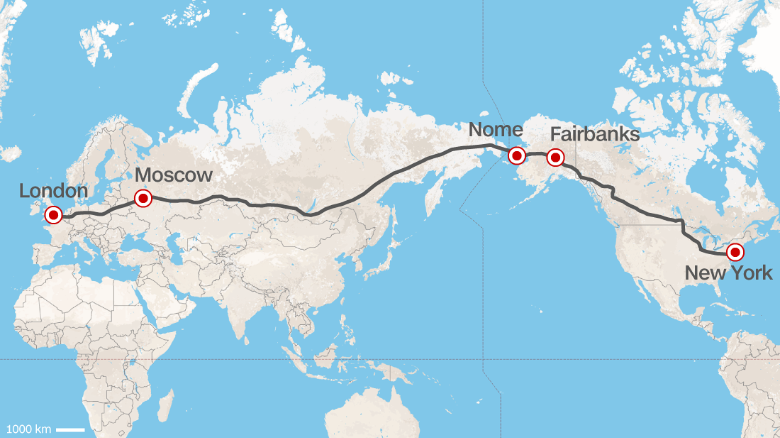
Route as roughly interpreted by CNN. The proposed plan for a massive trans-Siberian highway would link Russia's eastern border with the U.S. state of Alaska.
It could happen if the head of Russian Railways has his way.
According to a March 23 report in The Siberian Times, Russian Railways president Vladimir Yakunin has proposed a plan for a massive trans-Siberian highway that would link his country's eastern border with the U.S. state of Alaska, crossing a narrow stretch of the Bering Sea that separates Asia and North America.
The scheme was unveiled at a meeting of the Moscow-based Russian Academy of Science.
Dubbed the Trans-Eurasian Belt Development (TEPR), the project calls for a major roadway to be constructed alongside the existing Trans-Siberian Railway, along with a new train network and oil and gas pipelines.
"This is an inter-state, inter-civilization, project," the Siberian Times quoted Yakunin. "The project should be turned into a world 'future zone,' and it must be based on leading, not catching, technologies."

    "Are we there yet?"

    The road would run across the entirety of Russia, linking with existing road systems in Western Europe and Asia.
    The distance between Russia's western and eastern borders is roughly 10,000 kilometers (6,200 miles).
    Yakunin said the road would connect Russia with North America via Russia's far eastern Chukotka region, across the Bering Strait and into Alaska's Seward Peninsula.
    The road would likely enter Alaska some distance north of the town of Nome, where the famed Iditarod sled dog race ends.
    How would drivers span the ocean gap between Siberia and Alaska? Ferry? Tunnel? Bridges?
    The report didn't offer specifics on the route across the sea.
    The shortest distance between mainland Russia and mainland Alaska is approximately 88 kilometers (55 miles), according to the Alaska Public Lands Information Centers.
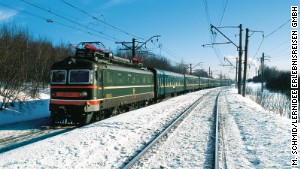
    The main route of the Trans-Siberian railway runs from Moscow to Vladivostok and covers 9,258 kilometers.
    A theoretical drive (as fancifully calculated by CNN) from London to Alaska via Moscow might cover about 12,978 kilometers (8,064 miles).
    Relatively isolated even by Alaska standards, no road connects Nome with the rest of the state's road system.
    About 836 road-less kilometers (520 miles) across desolate terrain separates Nome from the closest major city and road network in Fairbanks, the unofficial northern terminus of the Alaska Highway.
    From Fairbanks, Canada and the 48 contiguous U.S. states can be reached by road.
    Assuming a road to Nome were ever built (the idea has been studied by the state of Alaska), a fantasy road trip from London to New York might cover a grueling but presumably photo-op-laden 20,777 kilometers (12,910 miles).
    Facebook posts from forlorn Siberian rest stops might alone make the trip worthwhile, though the journey would also easily establish irritating new records for "Are we there yet?" gripes from the kids.

    Who's gonna pay for this thing?

    Yakunin has been described as a close friend of Russian President Vladimir Putin.
    Some sources have speculated that he could be Putin's likely successor as president.
    TEPR would reportedly cost "trillions of dollars."
    According to Yakunin, however, massive economic returns would more than make up for the massive cash outlay -- about which the report also included no details.

    суббота, 28 марта 2015 г.

    Less Leasing Love From Lessors


    6800196849_cfcc40776a_z
    Image: Courtesy JDL Multimedia
    New airplanes are good for everyone; that’s the story aircraft manufacturers are pushing and even some airlines are buying in to. With greater fuel efficiency, longer range, and higher capacity, the push is on to get new aircraft into every airline’s hangars.
    United Airlines predicts that it will save approximately two million annually for each Boeing 757-200 it replaces with a new Boeing 737-900ER in its domestic fleet, for example, but this prediction is based when aviation fuel prices were much higher. Meanwhile, Allegiant has made a different business decision of flying old–but reliable–aircraft until they break; then, Allegiant will replace them with another inexpensive, older plane, but it would seem that Qatar Airways CEO Akbar Al Baker has a much different different approach as he recently suggested that the 787s his airline has recently acquired will be out of the fleet in less than a decade, making way for newer and larger aircraft.
    Boeing expects to be producing 52 of its 737 aircraft each month by 2018 while Airbus is increasing its A320 family output to 46 per month by Q2 2016. Some widebody aircraft, such as the A330 or 747-8 families, are seeing reductions in production rates to partially offset the increase while others, including the 787 family, see increasing production rates to counter large backlogs.boeing-777-moving-line-starts2006_28409
    And then there are those who worry about the ever increasing pace of aircraft delivery and its potential impact on the market overall. Many of them are in the aircraft leasing and financing business who are faced with a rapidly changing market structure and demand profile, one which the major manufacturers are upsetting with increased production rates.
    CIT Aerospace, a lessor with roughly nine billion in aircraft under management, and plans to buy 15 A330neo aircraft, pressed for caution amongst the manufacturers in the near future. The statement was made at the International Society of Transport Aircraft Trading (ISTAT) conference recently amidst talk of an even greater push by Airbus and Boeing to capture market share.
    Much of it comes down to residual value and amortization over time. The lessors historically have depended on a reasonably strong secondary market, often in secondary or tertiary countries, where used aircraft can operate reliably well after the initial service run at a major carrier. Today, however, more and more airlines are buying new from Airbus or Boeing rather than taking planes second-hand. More airlines are focusing on providing the comfortable passenger experience rather than simply transportation from A to B.
    So airlines are owning new planes for shorter lifecycles and buying or leasing fewer used planes. This glut of inventory pushes down costs in the secondary market which is understandably bad for the lessors, but what does it mean to the broader industry as a whole? Passenger experiences are generally better on newer planes and the environmental impact is hard to argue, but for the airlines, is it better to run the newer aircraft with higher capital costs and lower operating costs or the older planes with that ratio reversed? Especially if the secondary market continues to see declining prices. This will impact the first owners of new planes down the line as they look to unload and cash out on the airframe.
    Ultimately, this could portend an inversion in the market where the traditional legacy carriers start operating more and more second-hand planes to better control total costs while the upstarts, flush with investor cash or loan guarantees, happily take the new planes off assembly lines around the world. And, in the middle, the private-sector financing groups will struggle to make a profit from the industry where public financing seems spectacularly easy to secure.

    четверг, 26 марта 2015 г.

    Here's Why Airliners Still Don't Have Real-Time Tracking Tech

    It's been one year since Malaysia Airlines Flight 370 vanished into thin air. So why aren't we doing a better job of tracking planes yet?

    From the moment MH370 disappeared more than one year ago, the world has been asking how a jumbo jet carrying 239 people could vanish. Now, the aviation industry is grappling with another question: Where are the promised flight tracking systems that would prevent this from ever happening again?
    The technology would transmit in real time a multidimensional picture of an aircraft's position, measured by longitude, latitude, altitude, and the local time as provided by satellites. This is the same data that is captured by the flight data recorders (the black boxes), which, in the case of MH370, are presumed to be somewhere in the depths of the Indian Ocean. However, the International Air Transport Association (IATA) said it might not be possible to meet its goal of making all aircraft traceable within a year—something that had seemed a reasonable deadline in the aftermath of MH370.
    Tony Tyler, the former Cathay Pacific executive who heads the 250-member airline trade group, said that while the group is taking the issue "seriously," it's not clear whether all carriers are on board with the timetable.
    "There is no silver bullet solution on tracking," he said at a briefing in Geneva. "The industry is working to improve, but some issues…. will take time to address and implement," he added, noting that the sealing of cockpit doors after the Sept. 11 attacks took several years to complete.
    So what's the problem? The IATA just released a study from its Aircraft Tracking Task Force, which, after the disappearance of MH370, was charged with developing tracking options for planes. The study's main focus is how to track planes in areas that have no radar coverage, such as remote areas over water. Thanks to the modernization of air traffic control systems, that tracking is already improving, but that alone won't be enough to track all planes if airlines don't make their own upgrades.
    The IATA report is supposed to contain information about how many airlines are already equipped for real-time tracking, but the details have not yet been made public. We do know the authors conclude that some may not be able to meet the new standards by target date of the end of 2015.
    Plus, there's the question of authority: The IATA can't make the airlines fall in line and add new tracking tech. Any governmental action to require such tracking must come via the U.N.'s International Civil Aviation Organization, which could put pressure on individual countries to act if it sees fit. The issue next goes before them at a summit in February.
    The study also raised the prospect of requiring carriers to acquire tamper-proof transponders within three years. A criminal investigation under way in Malaysia is examining the possibility that someone on the plane intentionally disabled the transponder of the 777, which effectively made it untraceable and allowed it to fly undetected for hours. But IATA stopped short of saying that the new transponders should be mandated.
    There's also disagreement on how much it will cost. The upgrades could cost tens of thousands of dollars per aircraft, and many airlines have expressed concern about the high cost given how rare it is for an aircraft to disappear.
    Of course, those same arguments were made after Air France 447 crashed into the South Atlantic in 2009, when the industry had an opportunity to make the changes that might have prevented MH370's disappearance.

    “Living in the Age of Airplanes” Is a Visually-Stunning Aviation Film for All Ages


    I recently had the opportunity to attend a pre-release screening of National Geographic’s new IMAX film, “Living in the Age of Airplanes.” I first saw the trailer last fall and was immediately excited to see it. Being the aviation geek that I am, I held high expectations, and I’m happy to be able to say they were met.
    The project was produced and directed by Brian J. Terwilliger, who is also known for the aviation film “One Six Right.” The runtime of the show was 47 minutes, and the producers maximized every minute with absolutely stunning cinematography, paired with majestic music tracks by Oscar-winning composer James Horner and narration by Harrison Ford. The show opened in the famous “Airplane Graveyard” in Mojave, California, with sad, parted-out 747s as Ford spoke about how air travel is now taken for granted.
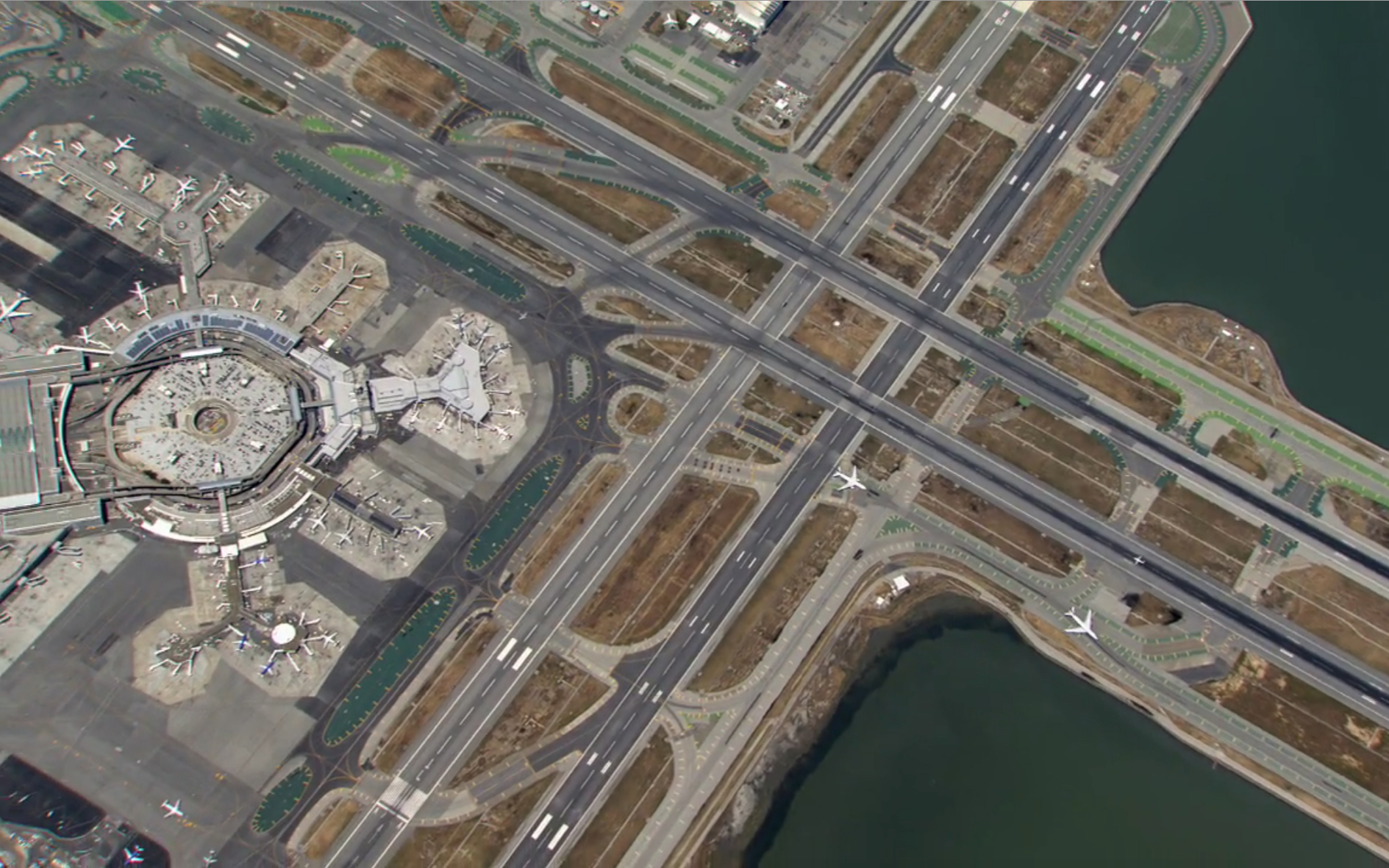
    Movie - SFO Overhead
    Next, we are taken down a timeline of human transportation. Beginning 200,000 years ago, humans had only one mode of transportation – our own two feet. Then roughly 5,000 years ago, the wheel was invented, and we began having animals pull us along. Fast-forward to the 1600s, when sailing ships took us across the seas and expanded our globe. In the 1800s, steam trains, and later, steam ships, propeller planes, and finally, the Jet Age.

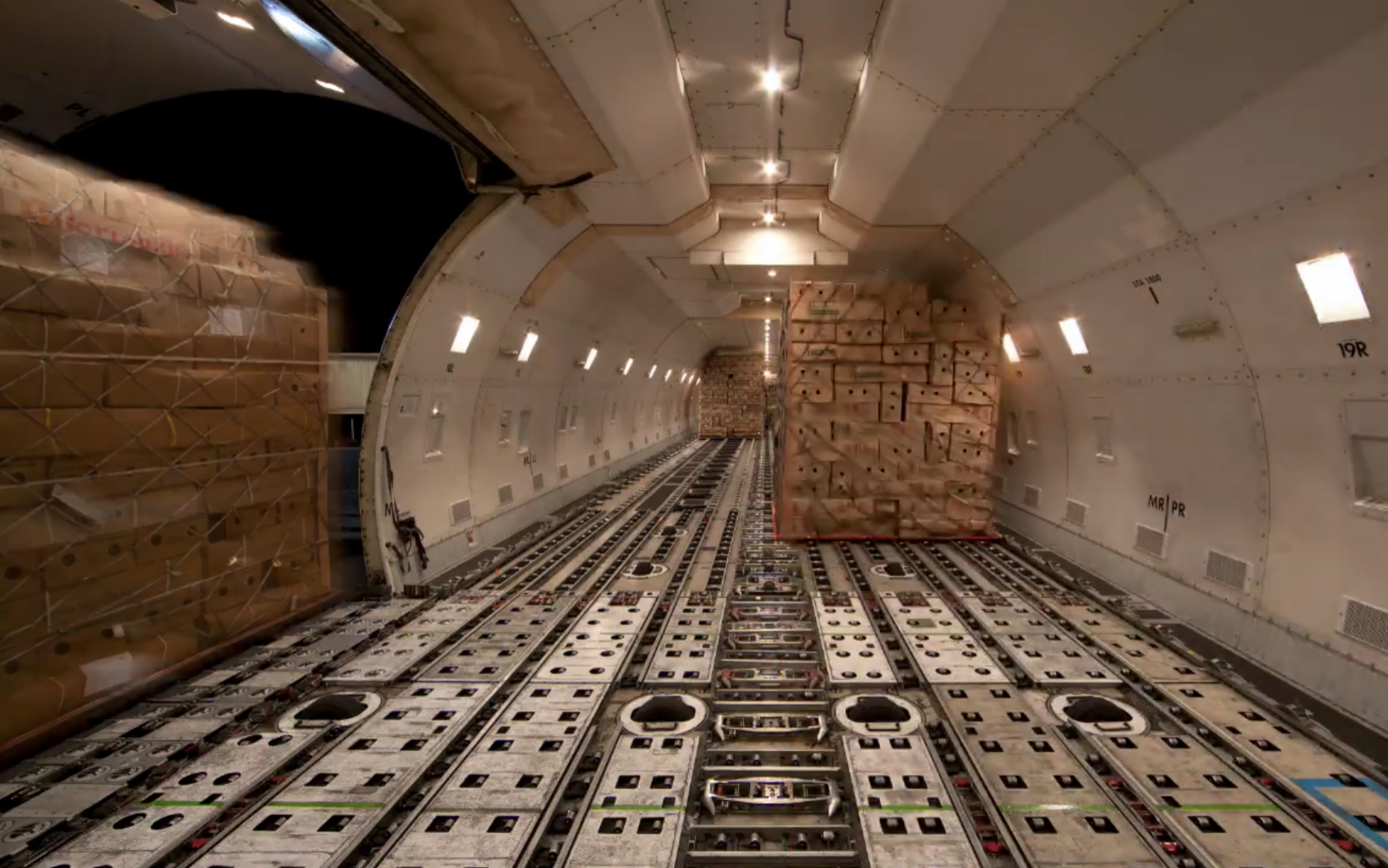
    Movie - Cargo Plane Interior
    Another focus of the film is the importance of the global air cargo network. To demonstrate this, we see a bouquet of long-stemmed roses make its way from the grower in Kenya, to the wholesale market in Amsterdam, to a vase in Alaska in just over seventeen hours. We also see how our homes are a melting pot for produce, garments, and housewares from all over the globe.
    In the final scene, we’re given a look at our own perspective as travelers. When we fly, we often sit there without realizing we’re going anywhere, Ford says. But taking a look out the window, from 35,000 feet; we see more of our Earth in one glance than most of our ancestors saw in their whole life. This window seat perspective is what I love most about aviation.
    Movie - Float Plane
    The cinematography alone makes this film worth seeing. A few scenes that come to mind: a United Boeing 777 traversing the taxiways at SFO as the camera ascents straight up to give a view of the whole Bay Area. A montage of Airbus A380s on takeoff. Seaplanes landing on azure waters in the Maldives.
    If I could improve anything about the film, it would be two things. First, I wish it were longer. Those 47 minutes really flew by, no pun intended. However, the movie’s reps on Twitter said the run time is right in the “sweet spot” for IMAX films. I would also have liked to see some content on the manufacturing process. So many advances have been made in the past couple of decades, including composite fuselages, glass cockpits, and eco-friendly fuels.
    Perhaps a follow-up film will cover how planes are built and tested. I’ve been fortunate to tour the assembly lines where some commercial aircraft are built, and it never ceases to amaze me the amount of knowledge and effort that goes into building planes.
    Everyone should see this film. It is appropriate for all audiences, from interested kids to the jaded million-mile flyers. It is my love and fascination of planes, put into images – and it’s incredible.
    All photos are screenshots taken from the video, cited to National Geographic. 

    среда, 25 марта 2015 г.

    In Global Exports, Smaller Nations Seek Edge

    Widespread growth in global arms exports may point to heightened competition for sales in the future as more countries develop increasingly sophisticated defense industries, analysts said.
    The US and Russia remain the dominant sellers, accounting for more than half of global sales between 2010 and 2014, according to figures released last week by the Stockholm International Peace Research Institute (SIPRI). But other countries are driving the overall growth in arms exports, which grew by 16 percent globally compared with the period between 2005 and 2009, analysts said.
    "There is competition coming from other parts of the world now. China is the most visible [example], but increasingly you have capabilities being developed in other parts of the world," said Jon Barney, managing director at Avascent, a strategy and management consulting firm. "It's a rising tide, and it's game-changing across the sector."
    After the US, Russia and China, European countries — Germany, France, the UK, Spain, Italy and Ukraine — and Israel round out the top 10 arms exporters. China experienced the largest growth in exports, up 143 percent from the previous period, while Germany's exports dropped by 43 percent, dropping it out of third place.
    Traditionally, China has produced very low-cost, low-tech systems, often copied from Russian models, said Philip Finnegan, director of corporate analysis at Teal Group. At a time when US defense spending has been relatively flat, China's defense budget has grown, and the investment is beginning to pay dividends, he said.
    "They're coming up, they're really moving up the value chain and sophistication level," Finnegan said.

    Closing the technology gap with the US to produce higher quality products is one way that emerging producers are making themselves more attractive to buyers. Sellers in the same region may be more convenient, and buying from countries besides the US and Russia often comes without the geopolitical and ideological strings attached.
    And even traditional alliances may become less influential in the future, said Remy Nathan, vice president of international affairs at the Aerospace Industries Association.
    "There are certain things that are just unlikely to occur," such as the UK buying a Chinese military system, Nathan said. "But having said that, I'm not taking it for granted that traditional customers of US systems are going to remain those customers."
    The market — the countries that need things, their ability to afford them, their desire to buy them — is changing, Nathan said. A program that is 80 percent effective but costs a fraction of one that is 90 or 95 percent effective will often win out, he said.
    Countries not in the top 10 are building up their programs by developing niche products, Finnegan said. For example, Turkey has made strides with its Anka UAV, a medium-altitude/long-endurance vehicle under development by Turkish Aerospace Industries. The KC-390, a twin-engine cargo plane manufactured by Brazil's Embraer, may someday provide competition for American made C-130s.
    "There's an ambition to develop broad industry, but it tends to be a niche approach," he said.
    Analysts said that while the US, Russia and China are likely to remain the top three exporters, European countries are the most vulnerable to lose their market share to the emerging upstarts.
    Byron Callan, a defense market analyst with Capital Alpha Partners, said that restrained defense budgets for European producers, including the UK, Germany, Spain and Italy, have hurt their prospects.
    "They've kind of starved their industry of research and development, and it's not clear how commercially competitive some of their next generation stuff is," he said. "They show up on this list right now, but if they're people who get bumped, it's going to be continental European countries."
    But it's hard to look back at sales figures and see what disruptions and perceptions of political instability will affect the market in the future, Callan said.
    "Some of the most disruptive things that are happening aren't coming from anybody on that list," he said. Non-state actors such as Boko Haram and the Islamic State can cause mayhem with light infantry weapons.
    "The instability isn't coming from main battle tanks and advanced aircraft, but groups that can get their hands on large stocks of weapons and ammunition," Callan said.

    вторник, 24 марта 2015 г.

    На юге Франции разбился пассажирский самолет Airbus A320

    CA23QRMWAAAJh5c
    На юге Франции разбился пассажирский самолет Airbus A320, сообщает La Provence.
    Информации о пострадавших пока нет, но по предварительным данным, на борту лайнера находились 142 пассажира и шесть членов экипажа.
    Самолет принадлежал компании Germanwings и выполнял рейс из Дюссельдорфа в Барселону.
    1163518706_D-AKNL_Airbus-A319-112_Germanwings