На государственном предприятии Антонов сегодня официально проходит презентация нового самолета АН-178.
Фотографии самолета на своей странице в Facebook выложил мэр Киева Виталий Кличко, который присутствует на презентации.
Этот самолет сможет в будущем использовать как армия, так и гражданская авиация.
"На Антонова уже работают над его версией для украинской армии", - написал Кличко.
Отметим, строительство первого экземпляра самолета началось в 2013 году, при этом сам самолет разрабатывался с 2010 года как замена для устаревших моделям Ан. Самолет создается на базе пассажирского Ан-158, лишь недавно запущенного в серийное производство.
Пока Западные союзники Киева обсуждают форматы помощи, Беларусь активно включилась в перевооружение украинской армии.
Торговлю с обеими сторонами можно списать на экономические интересы Беларуси. Как никак, при выборе между первым и вторым по объемам внешнеэкономическим партнёром хочется сохранить обоих. Но поставки техники двойного назначения, или же просто вооружения — политика совсем другого рода, пишет украинское издание hvylya.net.
Да, неожиданно. Но не сам факт, а прямолинейность его подачи и то, что из всего двухчасового интервью именно эта фраза начала рекламироваться пресс-службой президента Беларуси.
Лукашенко за долгую историю «интеграции» с Российской Федерацией прекрасно понимает всю опасность, которую представляет из себя союзник. И как только в Кремле начали поднимать ставки в борьбе за сферы влияния, в Минске поняли — Беларусь будет следующей. Особенно в случае поражения Украины. Тогда Кремлёвские властители уже не скрывая целей, приступят к реанимации СССР (или Российской Империи). В таком формате у Лукашенко есть два варианта: либо стать губернатором края (пусть и с сохранением названия «президент») или исчезнуть.
Таким образом, Лукашенко, кроме выгод успеха Украины, ощутил и опасность. Причём не только для Беларуси, но и для себя лично. Последнее чрезвычайно важно, учитывая характер «уже не последнего диктатора Европы». Что делать? Естественно, помочь Украине. И, что занимательно, пока Западные союзники Киева обсуждают форматы помощи, Минск действует. Да, торгуя. Да, за деньги. Но извините, тот же КРАЗ уже год ждёт от союзников двигатели для промышленного выпуска броневиков. А в ЕС всё думают: стоит ли так дразнить Россию. Это так, лирическое отступление. А дальше голые факты. Которые обошли вниманием журналисты (как в Беларуси, так и в Украине).
Двигатели и автотехника.
Украинскому читателю известно, что страна хоть и большая, но не имеет своего производства двигателей для автотранспорта. В том числе и для бронированных машин. Первые поставки в ВСУ и НГ осуществлялись за счёт «старых запасов». Но уже к середине лета возникла проблема: своих двигателей нет. Россия, естественно, не продаёт. А западные союзники «обсуждают вопросы» поставки силовых установок. И опасаются, что таковые будут использованы для создания вооружений. Такие «опасения и раздумья», к слову продолжаются до сих пор. Вот ответ «диванным стратегам» из Украины почему тот же КРАЗ не завалил части своими машинами. И почему Украина покупала британские броневики. Последние были с движками, контракт включал ремкомплект и завод по ремонту. На основе последнего, кстати, можно в перспективе создать своё производство. Но это планы. А солдатам необходимо было на чём то ездить.
И тут обратим внимание на структуру белорусских поставок. В 2014 году двигатели из Беларуси составили 15% в общих объёмах украинского импорта. Общие объёмы поставок силовых установок выросли с 5,67 млн. долларов (в 2013 году) до 5,85 млн. При этом основной рост наблюдался в графе «другие»: 1,67 млн против 1,1 млн. В эту категорию относятся двигатели для специальной техники. В том числе и военной.
То же самое наблюдается в категории детали и части двигателей. Вновь раздел «другие». И сумма поставок в 2,84 миллиона. Что в 2 раза больше чем за 2013 год.
Дальше-больше. Помните рассказы волонтёров о украденных аккумуляторах с БТР. Как стоявших на складах частей. Так, естественно и на «долгосрочном хранении». Откуда они взялись? В том числе из Беларуси. Начиная с июня и до конца года границу пересекли (только официально) АКБ на сумму 124,6 тыс. долларов. Примечательно, что в 2013 году эта категория товаров не поставлялась вообще.
Электродвигатели и электросиловые установки. Это в том числе и то, что крутит башню БТР и танка. Таковых в 2014 году в Украину продано на сумму 2,19 миллионов. Учитывая суммарные объёмы поставок за 2013 год в аж целых 16 тысяч долларов рост более чем внушительный.
Таким образом, можно утверждать, что значительная часть техники, которую президент Украины торжественно передавал военным имело внутри «белорусский пламенный мотор». В том числе и известные всем «ПИОНЫ», Точки-У. Шасси для этих артиллерийских установок на сегодня в состоянии производить только одно предприятие – Минский завод колёсных тягачей. Немногочисленные белорусы, которые продолжали ездить на автомобиле в Киев отмечали, что всё лето в тёмное время суток по направлению к украинской границе небольшими группами ехали большие автомобили специфического внешнего вида. Увы, структура поставок МЗКТ, особенно военных, находится под грифом секретно. Но зато не является секретом статистика по деятельности Открытых акционерных обществ на сайте Минфина Беларуси. Увы, пока данные доступны лишь за 3 квартала 2014 года. Но и этого достаточно. В условиях обвала российского рынка и паузы в закупках тягачей для «Тополей» МЗКТ демонстрирует удивительную эффективность. Чистая прибыль предприятия за 3 квартал 2014 года превышает суммарную прибыль за весь 2013 год. А в Украине техника на минском шасси поступает на фронт. Увы, с маркетологами МЗКТ не разговаривал. Поэтому на всякий случай скажу — совпадение, господа.
Не совпадением является другое. Минский автомобильный завод активно продаёт грузовики Нацгвардии Украины. Причём в объёмах, превышающих поставки с КРАЗа. В июле 2014 российские СМИ взорвала новость о 44-х новых грузовиках у «украинских карателей». Проходит три месяца и НГ заключает новый контракт на ещё 27 автомобилей и спецтехнику — прицепы для транспортировки бронетехники. Те самые, которые производит упомянутый выше МЗКТ.
Кстати, белорусские производители учли специфику сотрудничества с российскими партнёрами. Летом МЗКТ представило гражданские версии тягачей с 490-сильным мотором ММЗ-WP12.460E5. А через месяц в Абу-Даби выставило военные многоцелевые шасси. В которых использована подвеска и АКПП собственной разработки.
Авиатехника
Война идёт не только на земле. Справедливо и в разрезе беларуско-украинского военного сотрудничества. Долгая работа украинских элит по развалу собственных ВС и ВПК привела к тому, что в стране катастрофически не хватает кадров и мощностей для восстановления (не говоря уже о создании) техники. В том числе авиационной. АН — всё же имеет свою нишу, которая мало пересекается со штурмовой и истребительной авиацией.
Но технологии модернизации и сборки двигателей есть в Беларуси. В частности на 558 авиаремонтном предприятии из Барановичей. С началом украинского кризиса на заводе объявили о возобновлении проекта модернизации самолётов СУ-27 и МИГ-2915. Кроме работы с силовыми установками модернизируется система управления огнём и обнаружения целей. Что позволяет чрезвычайно эффективно работать и по наземным объектам. С 2010 по 2014 гг. для иностранных заказчиков были модернизированы 4 МИГ 29 и 10 СУ-27. Украина, естественно, имеет свои авиаремонтные мощности. Но количество заказов на том же львовском авиаремонтром заводе исчислялось единицами. В случае войны главное скорость работ и качество.
А дальше просто факт или «совпадения». В декабре 2014 и январе 2015 украинские СМИ сообщали о передаче армии восстановленных самолётов МИГ-29. Это парадоксальным образом совпало с сообщением руководства 558 АРЗ о том, что тот в 2014 году за 66 млн. долларов «ремонтировал для иностранных заказчиков МиГ-29»16. Это, заметим, кроме беларуских заказов. Ремонт для ВВС России беларуские СМИ не скрывают под термином «иностранные». Возможно, это лишь допущение автора. А временные совпадения — действительно совпадения. Но есть ещё два факта. Они содержатся в открытом доступе. Статистика по торговле товарами и услугами. И вот, странно, Република Беларусь оказала Украине услуг «по ремонту» в 2,4 раза больше, чем в 2013 году. Сумма контрактов — 11 млн. долларов17. Сюда же можно добавить часть из 3,4 млн. за компьютерные и информационные услуги (перепрограммирование и модернизация систем наведения относится к данной категории) и часть из 98 миллионов долларов «деловых» услуг. Посредничество при покупке техники и комплектующих – одна из составляющих данной категории.
И, наконец, торговый баланс. Беларусь в кои то веки начала продавать Украине «летательные аппараты» и части к ним. За 2014 год сумма завершённых контрактов превысила 5 млн. долларов. А за первый квартал 2015 — уже 3,997 миллиона. Для справки – объемы поставки по этой категории в 2013 г — 12 тысяч долларов США.
Идём далее. Категория «радиолокационные и радионавигационные устройства» — рост объёмов поставок в 2 раза по сравнению с 2013 г. Правда, тут в большинстве своём это аппаратура дистанционного управления.
И эта графа, как и летательные аппараты возможно означает ещё одно направление. Беларусь — один из региональных лидеров по разработке и производству беспилотных летательных аппаратов. Тот же 558 завод производит и продаёт (в том числе на внешние рынки) БЛПА «Гриф-1». А в 2014 представил ещё две новинки. Комплекс бортовой аппаратуры индивидуальной радиотехнической защиты «Сателлит», позволяющий защищать летательные аппараты всех типов от поражения высокоточным радиоуправляемым оружием, а также носитель авиационных средств поражения НАСП Модуль-А. Если аналогичная техника «украинской разработки» будет в ближайшие месяцы представлена президентом Порошенко — особо не удивлюсь.
Ну и чтобы завершить авиационную тематику поговорим о турбовинтовых и турбореактивных двигателях. Эти товары уже Украина продавала Беларуси. Сумма контрактов — 12,39 млн. долларов. Для сравнения в 2013 году — 122 тысячи. Естественно, что основным покупателем выступал оршанский актив «Мотор Сич». Там производится ремонт и восстановления в том числе пострадавшей на Донбассе техники. Причём без особой маскировки. Корреспондент одного из независимых интернет-порталов не только побывал на предприятии, но и сфотографировал МИ-24 с характерными повреждениями и тактическим знаком ВВС Украины на борту. Хотя, это тоже совпадение. Для российских читателей. Вертолёт заблудился. И упал. А сердечные белорусы решили его восстановить — грех добру пропадать!
Кстати вертолётов будет столько, что тот же 558 завод объявил о планах отремонтировать и восстановить «14 МиГ-29 (УБ) и девять Ми-24 в интересах иностранных заказчиков». То есть заняться ремонтом и вертолётов — на стапелях в Орше уже места не хватает. Кроме того тот завод более разумно использовать для производства новой «полностью украинской» техники.
Таким образом, пока западные союзники Украины думали вооружать ли Киев в войне с Россией, «союзник» России реально помогал новой украинской власти. Причём суммы этой помощи измеряются десятками (если не сотнями) миллионов долларов. Внушительно, учитывая размеры самой Республики Беларусь.
С другой стороны это лишнее свидетельство того, что Лукашенко всерьёз ставит на военный успех Украины. Как и свидетельство того, что в Кремле задумываются о смене власти в Минске. Уж очень странный «союзник» получается.
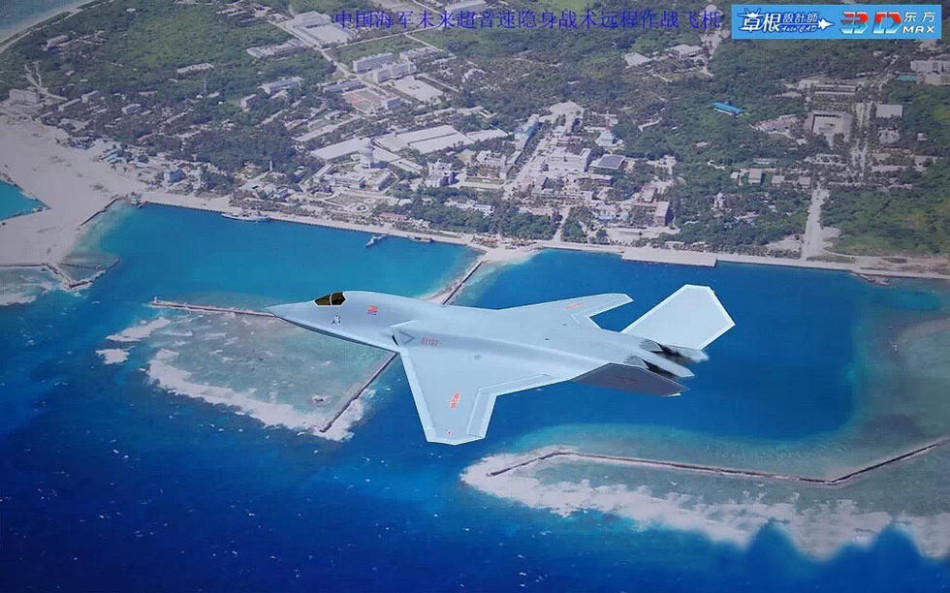
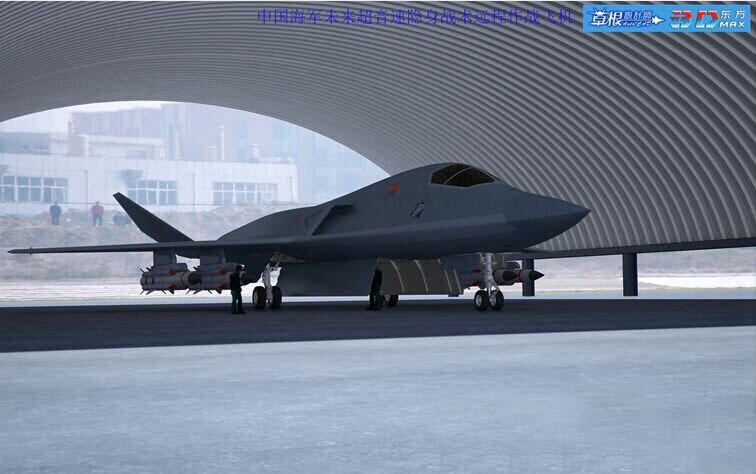
Если верить порталу defence-blog.com и если эта новость не запоздалая первоапрельская шутка, то Поднебесная хочет иметь в своем арсенале малозаметный фронтовой бомбардировщик.
Сообщается, что прототип может быть построен к 2025 году и в перспективе новый самолет заменит такие истребители-бомбардировщики как JH-7 Flying Leopard. Максимальная скорость стелс-бомбардировщика составит 1600 км/ч, а его дальность действия превысит 4700 км. Потолок сможет достигать 17 тыс. м. Помимо широкого применения мер, улучшающих малозаметность, примечателен еще один технический аспект. Речь идет о размещении экипажа бок-о-бок. Это решение впервые будет использовано на малозаметных боевых самолетах.
Концепция крылатой машины перекликается с концепцией российского фронтового бомбардировщика Су-34. Судя по всему, новый самолет станет узкоспециализированным бомбардировщиком, имеющим опциональную возможность поражать воздушные цели. В контексте нынешних реалий такой подход видится странным, поскольку современные истребители де-факто являются многофункциональными комплексами, способными выполнять весь спектр боевых задач (как поражение воздушных целей, так и нанесение точечных ударов по земле). Поэтому зачем создавать специализированный фронтовой бомбардировщик, да еще и с чистого листа – неясно.
Ранее США вынашивали похожую идею: на базе истребителя пятого поколения F-22 хотели построить бомбардировщик FB-22. Впоследствии от нее отказались, поскольку почти все функции такой машины смогут выполнять истребители F-22 и F-35, а также беспилотные летательные аппараты.
Заметим, что если фронтовые бомбардировщики (такие как Су-24) уходят в историю, то со стратегической авиацией прощаться пока рано. Как Америка, так и Россия разрабатывают стратегические бомбардировщики нового поколения. Есть сведения, что похожие работы ведет и Китай.
Within the decade, the F-35 Lightning II will be deployed to all corners of the globe—from the icy mountains of Norway to the scorching desert of Australia—and we must ensure the aircraft can perform in these dynamic environments. To do this, we look no further than a structure straight out of the post-World War II era: the McKinley Climate Testing Laboratory at Eglin Air Force Base, Florida.
Go behind the scenes in the climatic chamber with Lockheed Martin Test Pilot Billie Flynn in this video
The McKinley Climatic Laboratory, known simply as the “climatic chamber,” has been the home of climate testing for every aircraft developed since 1947. It has become a “rite of passage” for all aircraft on their journey to Initial Operating Capability (IOC).
As the F-35 approaches its IOC debut for the U.S. Marine Corps in 2015, it too must be put through the rigors of the climatic chamber. Only this time, the test is being performed differently than ever before.
To accommodate the swiveling engine nozzle and lift-fan system of the Lightning II, a 12-foot high “restraint and support” structure interwoven with a system of ventilation ducts was designed. This apparatus secures the F-35 and allows it to operate at high power in both conventional and Short Takeoff/Vertical Landing (STOVL) mode while inside the building.
Ventilation of the exhaust is vital to maintaining a stable temperature inside the chamber. Conditioned air is constantly pumped in to ensure the pressure in the building is always higher than the pressure inside the ducts surrounding the engine and other openings on the aircraft. This difference in pressure is a safeguard that maintains the jet exhaust is flowing out of the chamber through the ducts, allowing the facility to sustain a constant temperature.
Water spraying from the ducting at the back of the engine absorbs some sound wave vibrations emitted from the engine that is capable of generating 40,000 pounds of thrust—thereby decreasing decibel levels in the chamber.
Now, it’s time to play Mother Nature.
Heating Things Up
To kick off climatic testing, engine runs are conducted at a precise set of temperatures. Over a series of days, the temperature is steadily and incrementally increased until it reaches the test maximum of 120 degrees. While the chamber itself is set to a pre-determined temperature, additional solar lamps above the aircraft recreate the intense heat of the sun on the surface of the jet.
In reality, air temperature does not remain constant throughout the day—it increases each hour the sun is up, reaching its apex in the late afternoon. In the chamber, engineers recreate the temperature fluctuation of a 24-hour day.
Much like a car bakes in the sun on a summer day, so can the F-35 Lightning. To recreate the environment in which a jet is left outside on the flight line at, say, Marine Corps Air Station Yuma in Arizona, the jet remains powered down in the chamber until it reaches the simulated day’s maximum temperature. Once temperatures peak, the test team fires up the aircraft—much like a pilot would on a typical, sweltering afternoon at Yuma.
Keeping It Cool
In a matter of days, the chamber transitions from a devilishly hot sauna to the Arctic Circle. Outside air is super-cooled using McKinley Lab’s refrigeration system and pushed into the chamber. In increments, the chamber walks its way down to -40 degrees while the jet completes test runs along the way.
At such frigid temperatures, aircraft fluids start to thicken and mechanisms operate slower—all points upon which test engineers keep a watchful eye as the temperatures dip dangerously low.
Successfully completing cold testing is another crucial step in the F-35’s journey towards IOC, because the F-35 would experience this type of environment while operating in Canada or Norway.
Let It Snow
Next, the Lightning II faces its harshest climate yet: a barrage of snow and ice that would have Santa Claus shaking in his boots.
When the F-35 hurtles through the clouds at high speeds in freezing climates, large pieces of ice can form quickly on the aircraft’s exterior. These heavy chunks of ice may break off and damage the aircraft, errantly fly into the engine or create a Foreign Object Damage (FOD) concern. For this reason, icing is one of the most dangerous elements in climatic testing.
In front of the jet sits a large apparatus composed of three massive cylinders stacked in a pyramid, parallel to the ground. Inside these cylinders are a total of nine ducted fans that blow a huge amount of air through a single funnel in the front, like a giant hairdryer. Attached to the front of this funnel is a spray bar capable of producing “clouds” of various water droplet sizes.
These droplets are blown toward the plane and freeze upon contact. While the lab cannot generate the precise wind speeds experienced by airborne aircraft, the unique setup inside the chamber is capable of producing sustained wind speeds up to 120 miles per hour—all while spewing precipitation at the F-35.
Snow and ice testing gauges the effectiveness of the aircraft’s Ice Protection System and the ability of the jet to perform in winter weather.
When It Rains, It Pours
For its final test, it is time to take the F-35 into the center of a hurricane—so to speak. To gauge how a Lightning II would hold up sitting uncovered on the flight line at a place such as Eglin AFB, the McKinley Climatic Laboratory is equipped with a system of “rain frames” that drench the jet with steady rainfall.
During rain testing, the F-35 is soaked in rainfall ranging from 1.1 inches per hour, all the way to 3.3 inches per hour. With driving rain inevitably comes gusty wind. Following the steady soak, a spray bar is placed at various positions around the aircraft. Behind this pole is a large industrial fan that generates sustained winds of 44 miles per hour in the direction of the spray bar and the F-35—creating a tropical storm-like environment that drenches the jet at that particular angle.
Whether soaring across the equator or over the tip of the northern hemisphere, the F-35 Lightning II must be ready to encounter any environment in its pursuit to defend our skies. The McKinley Climatic Laboratory helps us ensure we will be ready—no matter what Mother Nature brings.
Underscoring the company’s philosophy for incremental innovation across its product line in order to meet ever-changing market needs, Airbus marked a key programme milestone with European Aviation Safety Agency (EASA) certification of the first 242-tonne maximum take-off weight A330-300 variant.
As Airbus’ latest evolution to the twin-engine A330 Family, the increased take-off weight A330-300 and A330-200 jetliners incorporate a new aerodynamic package, engine improvements and optional centre fuel tank activation for the A330-300 version – upgrades which offer more capability at a lower operating cost and also serve as the development platform for the A330neo (new engine option).
The increased take-off weight A330-300 variant delivers an extended range of up to 6,100 nautical miles for operators with the new centre fuel tank configuration, while offering up to 2 percent reduction in fuel consumption. In operational terms, this means Airbus’ 242-tonne A330-300 can fly routes connecting Europe and Southeast Asia; while serving over 90 percent of long-haul traffic from London.
The EASA airworthiness approval covers the increased take-off weight A330-300 powered by GE CF6-80E1 engines – with this variant’s subsequent certification by the U.S. Federal Aviation Administration (FAA) expected to follow soon. The GE-powered A330-300 variant’s certification culminates Airbus’ successful flight test campaign that included approximately 100 total flight hours performed by an in-house development A330 jetliner to validate the new aerodynamic package, and a production aircraft to confirm the centre tank configuration and overall A330-300 performance.
In the coming months, Airbus also is planning to certify the remaining increased take-off weight A330-300 and A330-200 variants for the jetliners’ other engine choices: the Rolls-Royce Trent 700 and Pratt & Whitney’s PW4000. U.S.-based launch customer Delta Air Lines is scheduled to take delivery of the initial increased take-off weight A330 variant later this year – as the first of 11 worldwide customers who have ordered this option since its launch in 2012. Delta Air Lines selected the GE-powered version for its 242-tonne maximum take-off weight A330-300.
The incremental innovations incorporated on Airbus’ 242-tonne A330 variant represent a key step on the path toward the A330neo (new engine option), which was launched in 2014. Benefitting from additional aerodynamic improvements and its use of new Rolls-Royce Trent 7000 engines, the A330neo will offer unmatched operating economics, while also featuring the latest cabin interior innovations
Head in the clouds? UK developers are working on removing windows in planes to save weight and fuel, replacing them with smartscreen panels broadcasting the view. Photograph: Tomasz Wyszo/mirski/ww.dabarti/CPI
It is a glimpse into the future that will inspire wonder in some people but perhaps strike terror into the heart of the nervous flyer: a windowless plane that nonetheless allows passengers to see what’s going on outside, as well as checking their email and surfing the net.
In a vision of what the next generation of commercial aircraft could look like in little more than a decade, windows would be replaced by full-length screens allowing constant views of the world outside. Passengers would be able to switch the view on and off according to their preference, identify prominent sights by tapping the screen or even just surf the internet.
The early-stage concept for the windowless plane, based on technology used in mobile phones and televisions, hails from the Centre for Process Innovation (CPI), an organisation with sites across north-east England that works with companies to develop new products. It imagines how large, hi-definition, ultra thin and lightweight displays could form the inside of the fuselage, displaying images of the exterior from cameras mounted on the plane’s exterior.
But the real ambition echoes a constant quest in the aviation industry: how to reduce weight, which would cut fuel consumption, thereby bringing down fares. According to the CPI, for every 1% reduction in the weight of an aircraft, there is a saving in fuel of 0.75%.
The idea came about after discussions about how printable electronics, in which the centre specialises, could be used. “We had been speaking to people in aerospace and we understood that there was this need to take weight out of aircraft,” said Dr Jon Helliwell of the CPI. By putting windows into a plane, the fuselage needed to be strengthened, he added, and by omitting them in favour of walls of screens on panels, the fuselage would be lighter.
“Follow the logical thought through. Let’s take all the windows out – that’s what they do in cargo aircraft – what are the passengers going to do? If you think about it, it’s only really the people that are sitting next to windows that will suffer.”
These futuristic plans would involve screen panels reflecting whatever view of the outside the passenger wanted, changing in accordance with the direction of their eyes.
The screens would be made using organic light-emitting diodes (OLEDs) – a combination of materials that give out their own light when activated by electricity. The problems with the technology involve price and their sensitivity to moisture, which means they are generally encased in inflexible glass, mostly in mobile phones and televisions. The key development, said Helliwell, would be flexible OLEDs, which would allow the creation of screens suitable for an aeroplane. Electronics company LG recently posted a video of an 18-inch (46cm) screen which bends and contorts while the images on screen are broadcast uninterrupted.
“What would be great would be to make devices based on OLEDs that are flexible. We can make transistors that are flexible but if we can make OLEDs that are flexible, that gives us a lot of potential in the market because we can print OLEDs on to packaging, we can create flexible displays,” he said.
The CPI is one of seven bodies under the High Value Manufacturing Catapult, an umbrella group which receives government funding to drive growth in manufacturing. Part of the way the CPI operates is to identify challenges in industry – such as the windowless plane – and develop ways to overcome them, according to Helliwell.
Using £35m worth of advanced equipment in its Sedgefield facility, the CPI says it working on technologies to advance flexible OLEDs and tackle problems of cost and durability.
This could lead to the development of the OLEDs and the windowless plane, but could also be used in “smart packaging” for medicines or food which would contain information that could be displayed on a mobile phone.
One of the first steps in developing OLEDs is a mask which helps treat eye disease among people with diabetes. The device from PolyPhotonix, which was developed at the CPI, aims to stop the breakdown of blood vessels during sleep as a result of the disease. Using the device, the eye is fooled into thinking that it is daytime, when there is not the same problem with blood vessel breakdown.
The concept for the plane, said Helliwell – letting passengers see outside while allowing a lighter fuselage – followed discussions with the aerospace industry. The idea of having the displays lining the inside of the plane could become reality in 10 years, after other “building blocks” in the development of OLED are completed, he added. “We are talking about it now because it matches the kind of development timelines that they have in the aerospace industry.
“So you could have a display next to a seat if you wanted it; you could have a blank area next to a seat if you wanted it; you would have complete flexibility as to where you put [the panel screens]. You could put screens on the back of the seats in the middle and link them to the same cameras.”
What are OLEDs
OLEDs are a combination of advanced materials that give out their own light when activated by electricity and are typically used to make screens and lighting. Unlike LCD and plasma displays, they do not need a backlight, meaning that they use less energy and can be much thinner than other displays, while also displaying a higher contrast. Among ambitions for OLEDs involve printing them on sheets or wallpapering them on rooms, effectively turning the walls into lights.
The Gulfstream Symmetry Flight Deck, with BAE Systems’ Active Inceptors/Sidesticks, in the new G500/G600. Photo: Gulfstream Aerospace
Pilots flying the upcoming Gulfstream G500 and G600 business jets will control their planes with an advanced version of the ubiquitous sidestick. In the first civil-aircraft installation of the technology, BAE Systems’ “Active Inceptor System,” not only provides pilots with tactile feedback, but the pilot’s and co-pilot’s sticks will be electronically coupled. The stick movements made by one pilot, or the autopilot, will be seen and felt by the other. In case you’re wondering, BAE uses the word “inceptor,” to describe “the controls that pilots use to direct and maneuver the aircraft.”
Gulfstream G500, which rolled out mid-October, 2014. Photo: Gulfstream
The vast majority of aircraft, big and small, have mechanical connections between the pilot’s stick, or yoke, and the flight control surfaces – the ailerons for roll, elevator for pitch, and the rudder for yaw. When a pilot moves the yoke, not only will the linked co-pilot’s yoke move, but the pilot will feel the response of the control surfaces. In flight training, an instructor will say, “Follow me along on the controls,” and the student will see what the instructor is doing by watching the control wheel in front of her, and feel the feedback from the plane. It’s a useful and important process in learning how to fly.
Decades ago, beginning with Concorde, fly-by-wire (FBW) flight control systems began appearing in large, commercial aircraft. Simply, FBW replaces a mechanical connection from the cockpit with an electronic one. The pilot commands a roll by moving the stick, which is translated into a digital signal, sent by wire to an actuator attached to the aileron, which then moves. All Airbus jets from the A320 to the A380 are full FBW, as are Boeing’s 777 and 787. With FBW, flight system engineers can develop software that adapts to different phases of flight, along with flight envelope protections. In theory, the plane can protect itself, and its passengers, from extreme situations or pilot inputs.
The two airframers went down different paths in developing the pilots’ FBW control system.After all, with FBW, any kind of digital input device could be used to fly the plane, perhaps even an Xbox or Playstation controller. The pilots are essentially “flying” the FBW software installed in the flight control computers, which interpret the control inputs and send the signals on. So, Boeing decided to maintain the legacy of linked control columns and yokes, and that’s what you’ll see in a 777 or 787 cockpit. In those planes, a pilot can see the controls move, whether it’s the other pilot or the autopilot flying. Airbus went a different route, and opened up the cockpit by using sidesticks, mounted just below the side windows, beside each pilots’ seat.
Gulfstream G500/G600 BAE Systems Active Sidestick. Photo: Gulfstream Aerospace
The Airbus sidesticks, and those in other similar sidestick equipped FBW aircraft are passive.The pilots don’t get any feedback, and the two sticks aren’t linked. The sticks don’t move when the autopilot is flying, either. And with millions and millions andmillions of safe, sidestick flight hours, it’s clear that this is a technology that works. But commercial pilots will often be in the Boeing-yoke or Airbus-sidestick camp, with a major preference for the FBW philosophy, design, and control of one over the other.
Much has been written, of late, about pilot training and the handling of in-flight emergencies, such as in the tragic crashes of AF447 and AirAsia 8501. Some believe that passive sidesticks don’t communicate enough information to the crew. Others point to the programming, complexity, and functionality of FBW software as a problem. But at the end of the day, doesn’t it just come down to the ability of the flight crew to understand the systems and control the aircraft? Or perhaps the lack of ability, as shown by the crew of Colgan 3407, who stalled a non-FBW, yoke-equipped Bombardier Q400 into the ground in Buffalo, NY.
Gulfstream clearly believes in FBW technology, and with the new BAE system, the G500 and G600 are the first sidestick-controlled planes in the fleet. As the company says in its brochure, “Pilots will be drawn to the active control sidesticks. The controls replace the traditional pedestal mounted yoke, and provide increased visibility and improved pilot comfort.” Gulfstream has combined the BAE Active Inceptors and flight display flat-panel, touch-screen technology into its Symmetry Flight Deck, showcasing the company’s “Intelligence-by-Wire,” integrated flight control system. BAE’s Active Inceptor System is already flying in military applications, such as the F-35 Lightning II, and UH-60 and CH-53K helicopters. The system was also chosen for the Embraer KC-390 airlifter, which recently had its first flight.
Now there’s a third group for pilots to join – the Gulfstream/BAE Active Sidestick camp. I think there will be lineups to get in.
Aviation Technology’s AltAlert provides audible and visual alerts when cabin altitude climbs to dangerous levels. The device can fit in a pocket or be mounted on the aircraft window.
While aircraft that fly in the flight levels have pressurization-failure warning systems, accidents involving apparently hypoxic pilots keep happening. Stacy Pappas Sawaya, president and CEO of Carlsbad, Calif.-based Aviation Technology, researched these types of accident and invented a new portable warning device–the AltAlert “personal cabin pressure monitor”–that pilots can use to help detect a pressurization failure well before it causes hypoxia. AltAlert can also help remind pilots flying unpressurized high-altitude aircraft that it’s time to don oxygen masks.
The AltAlert device is easy to carry into any aircraft and can either clip onto a shirt pocket or be suction-cupped to a window near the pilot’s field of view. Both aural and LED visual alarms warn the pilot that the cabin altitude is climbing above specific thresholds. AltAlert is available from many pilot shops and retails for $399.95.
The AltAlert is based on a NASA patent, but what Sawaya and her engineering team did was develop algorithms that make the device work reliably and consistently with a long battery life of 18 months. “It took about four years from the concept to getting it completely developed and bringing it to market,” she said.
“I started researching the number of accidents logged with the NTSB related to pressurization,” Sawaya explained. “The Payne Stewart accident was the most highly publicized, but the total number is enormous. It was really just a coincidence that the TBM 900 went down last September; we were finishing up by then. It was yet another example of the need for this device and its lifesaving capabilities.”
AURAL AND VISUAL WARNINGS
AltAlert is built around a pressure sensor. The algorithm drives six alarm modes, from nothing until 10,000 feet to combinations of a flashing LED and audible chirps at various higher altitudes. Above 10,000 feet, the red light flashes every 15 seconds along with a single “courtesy” chirp. Above 11,500 feet, the light flashes every five seconds and two chirps warn the pilot that cabin altitude has reached that level. Above 12,500 feet, the light flashes every second and there is a triple chirp. At this point the AltAlert also starts a 30-minute timer and if the aircraft’s altitude is between 12,500 and 14,999 feet after that interval, it switches to the above-15,000-foot alarm (the highest alarm). The above-14,000-foot alarm is flashes a red LED every second, but adds a constant double chirp. Above 15,000 feet, the LED and the chirp both remain on constantly. The first four modes can be muted, but once above 14,000 feet, the device cannot be muted.
I tested the AltAlert in a Cessna 172 with another pilot. We both used a pulse oximeter to measure our oxygen saturation as we climbed to 12,500 feet west of Van Nuys, Calif. We were going to go higher, but the 172 would have taken too long to climb the remaining 1,500 feet and we had no supplemental oxygen. Also, we felt that our oxygen saturation numbers precluded remaining at high altitudes any longer.
The AltAlert worked as advertised, and the LED was clearly visible and the chirps audible even with my passive headset on. It’s difficult to say whether the AltAlert would capture a pilot’s attention during a cabin pressurization problem, but it would certainly be useful to have as a backup device and it should increase the chances that pilots or even a passenger flying in the other seat might notice that there is a cabin-altitude problem. Where it seems AltAlert could really help is during a slow decompression, especially in an airplane without an automatic emergency-descent autopilot mode.
“We’re really excited about it,” said Sawaya. “It’s been lot of hard work and a lot of sacrifice.” One pilot bought an AltAlert after experiencing a slow leak caused by a failing door seal. “He was getting hypoxic,” she said, “and was able to recognize it and do an emergency landing before any tragic consequences. He said, ‘I wish I had this a year ago. I’m one of the lucky ones.’ To be able to put something like this on the market for a reasonable price is something we’re really proud of.”
I recently had the opportunity to attend a pre-release screening of National Geographic’s new IMAX film, “Living in the Age of Airplanes.” I first saw the trailer last fall and was immediately excited to see it. Being the aviation geek that I am, I held high expectations, and I’m happy to be able to say they were met.
The project was produced and directed by Brian J. Terwilliger, who is also known for the aviation film “One Six Right.” The runtime of the show was 47 minutes, and the producers maximized every minute with absolutely stunning cinematography, paired with majestic music tracks by Oscar-winning composer James Horner and narration by Harrison Ford. The show opened in the famous “Airplane Graveyard” in Mojave, California, with sad, parted-out 747s as Ford spoke about how air travel is now taken for granted. Next, we are taken down a timeline of human transportation. Beginning 200,000 years ago, humans had only one mode of transportation – our own two feet. Then roughly 5,000 years ago, the wheel was invented, and we began having animals pull us along. Fast-forward to the 1600s, when sailing ships took us across the seas and expanded our globe. In the 1800s, steam trains, and later, steam ships, propeller planes, and finally, the Jet Age.
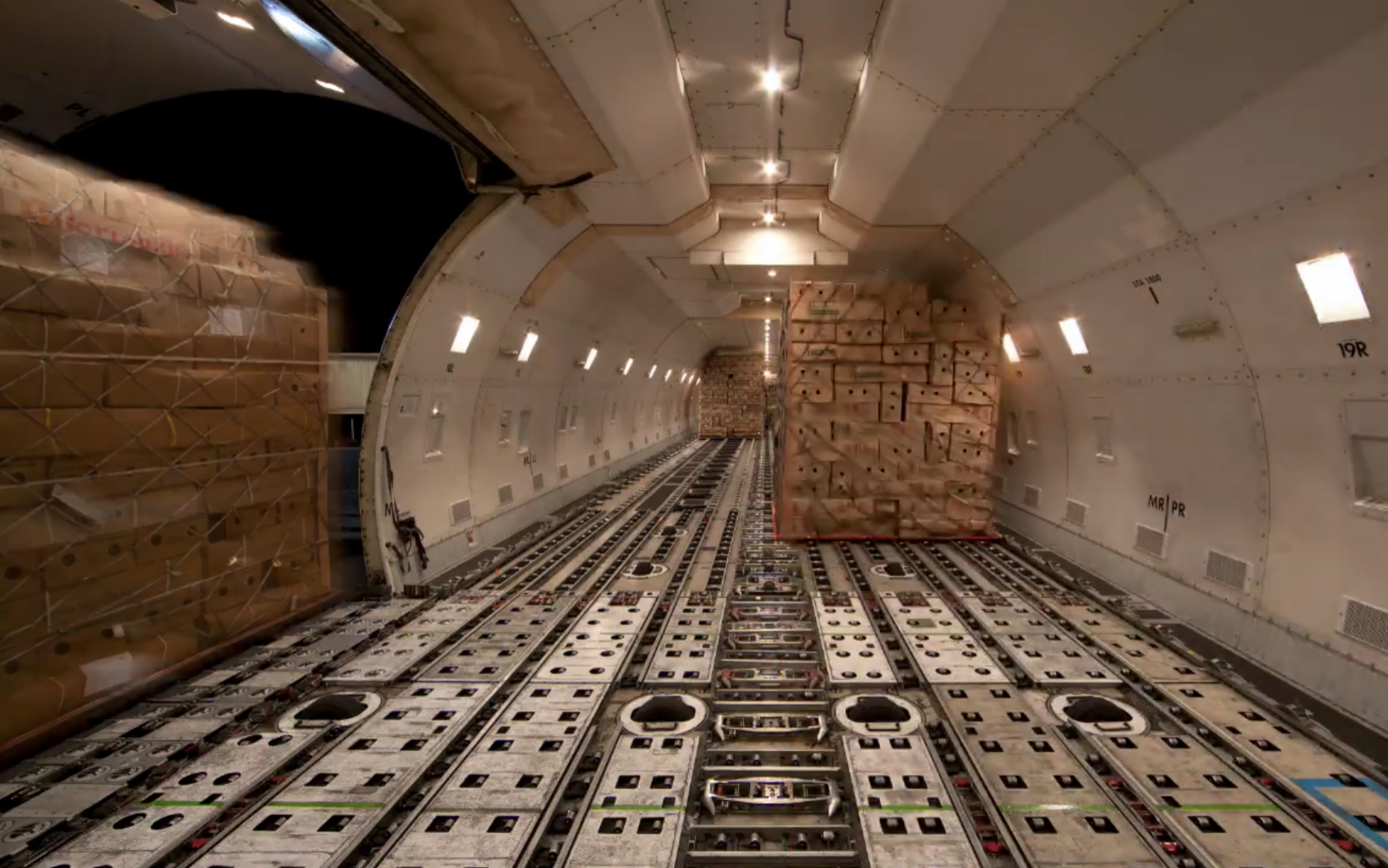
Another focus of the film is the importance of the global air cargo network. To demonstrate this, we see a bouquet of long-stemmed roses make its way from the grower in Kenya, to the wholesale market in Amsterdam, to a vase in Alaska in just over seventeen hours. We also see how our homes are a melting pot for produce, garments, and housewares from all over the globe.
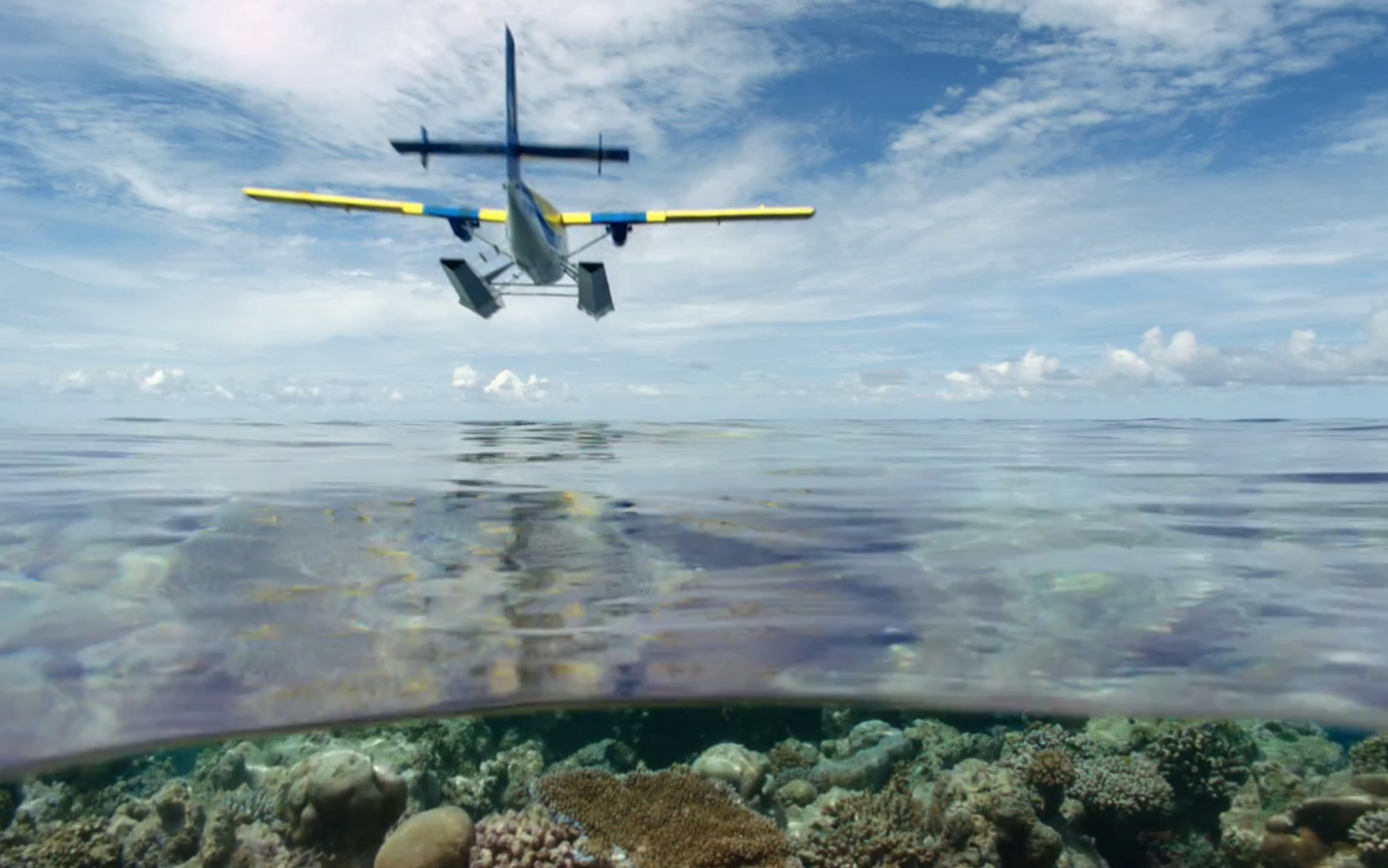
In the final scene, we’re given a look at our own perspective as travelers. When we fly, we often sit there without realizing we’re going anywhere, Ford says. But taking a look out the window, from 35,000 feet; we see more of our Earth in one glance than most of our ancestors saw in their whole life. This window seat perspective is what I love most about aviation. The cinematography alone makes this film worth seeing. A few scenes that come to mind: a United Boeing 777 traversing the taxiways at SFO as the camera ascents straight up to give a view of the whole Bay Area. A montage of Airbus A380s on takeoff. Seaplanes landing on azure waters in the Maldives.
If I could improve anything about the film, it would be two things. First, I wish it were longer. Those 47 minutes really flew by, no pun intended. However, the movie’s reps on Twitter said the run time is right in the “sweet spot” for IMAX films. I would also have liked to see some content on the manufacturing process. So many advances have been made in the past couple of decades, including composite fuselages, glass cockpits, and eco-friendly fuels.
Perhaps a follow-up film will cover how planes are built and tested. I’ve been fortunate to tour the assembly lines where some commercial aircraft are built, and it never ceases to amaze me the amount of knowledge and effort that goes into building planes.
Everyone should see this film. It is appropriate for all audiences, from interested kids to the jaded million-mile flyers. It is my love and fascination of planes, put into images – and it’s incredible.
All photos are screenshots taken from the video, cited to National Geographic.
Шведские военные сообщили о том, что российские военные самолеты были замечены в районе шведского острова Готланд и датского острова Борнхольм.
По их данным, самолеты – два бомбардировщика Ту-22 и два истребителя Су-27 пролетели во вторник утром в международном воздушном пространстве над Балтикой с выключенными транспондерами.
«Впервые за многие годы мы наблюдали над Балтикой самолеты такого типа», – сообщил заместитель оперативного командующего ВВС Швеции Андерс Гренстад.
«Угроза в отношении Швеции не возросла, но вооруженные силы страны наблюдают за возросшей активностью в этом регионе», – прокомментировал ситуацию представитель шведской армии Йоран Мартенссон.
По словам министра обороны Швеции Петера Хульквиста, «россияне не нарушали правил, поскольку летали в международном воздушном пространстве, но полеты без включенных транспондеров – это неподобающее поведение».
В свою очередь глава МИД Швеции Маргот Вальстрем заявила, что полеты российских самолетов с выключенными транспондерами неприемлемы, назвав это нарушением международных авиационных правил
«Это случалось неоднократно, и это вызывающе. Мы устали выражать протесты против такого нарушения правил», – добавила министр.
The Vought XF8U-1 Crusader prototype will be unveiled at the Museum of Flight in Seattle following decades-long restoration. (photo via MOF)
This coming Wednesday (25th March, 2015) the Museum of Flight will be holding a celebration for the 60th anniversary of the first flight of the mighty Vought F8U Crusader at the museum’s restoration center in Everett, Washington. The ceremony will begin at 11am as they publicly unveil their XF8U-1 prototype for the first time following a decades-long restoration effort. Many US Navy and Marine Corps Crusader veterans will be on hand for the event. Among the other speakers will be Dan Hagedorn, the Museum’s curator, Tom Cathcart, Director of Aircraft Collections & Restoration. The restoration team will also be well represented at the ceremony as well. Of course, the event is open to the public, with free admission to the Restoration Center for the day.
Another view of the XF8U-1. (photo via MOF)
The museum’s XF8U-1 is Bu.No.138899, the very aircraft which made the type’s first flight six decades ago with pilot John Konrad at the helm. This inaugural flight saw the aircraft break the sound barrier, something never before attempted successfully on a jet’s maiden mission. The type had a relatively trouble-free development, with the second prototype XF8U-1 and the production prototype F8U-1 first flying on the same day in September, 1955. The Crusader was already in carrier trials by early April, 1956 aboard the USS Forrestal, and operational the following year. From first flight to first fleet use in just two years seems incredible in today’s climate, where modern combat aircraft take well over a decade to become operational.
The Crusader was fast as well, setting a national air speed record in level flight of 1,015.428 mph on August 21st, 1956, during its victory in the Thompson Trophy race. The following July, with John Glenn at the controls, the Crusader made the first supersonic transcontinental crossing; bridging the distance between Los Alamitos, California and Floyd Bennet Field, New York in just over three hours, twenty three minutes. Chance Vought and the US Navy received the prestigious Collier Trophy for the Crusader, “for concept, design and development of the first carrier-based fighter capable of speeds exceeding 1,000 mph.” It won the Thompson Trophy in 1956 for setting a national and world speed record of 1,015.428 miles an hour.
The Crusader received the moniker “Last of the Gunfighters” when introduced due to its internal cannon armament at a time when all other types were moving exclusively to air-to-air missiles. The Crusader was a versatile aircraft though, and got stacked with all sorts of offensive weaponry during its time in the Viet Nam War. It was also a highly effective tactical reconnaissance platform, and this was the role it was perhaps most famous for due to the remarkably dangerous but vitally important photo-recon missions flown low and fast over Cuba during the Cuban Missile Crisis in 1962. The reconnaissance role gave the type longevity as well, with the last US Navy RF-8′s retiring in 1987; more than a decade after the service’s fighter/strike variants. Amazingly though, the French Navy was still fielding Crusaders in front line units on its aircraft carriers until finally replaced by the Dassault Rafale in 2000. Forty five years as a front line aircraft is not a bad run by any measure.
A close up of the Crusader cockpit showing the intense level of detail the museum has gone to to refurbish the aircraft. Note also the variable angle of attack wing, a unique feature on a production aircraft. (photo via MOF)
The Museum of Flight’s XF8U-1 served for about five years in the test role before its retirement. The Navy gifted it to the Smithsonian’s National Air & Space Museum, but since there was no room to display it, the Crusader sat in storage at NASM’s Garber Facility, the museum loaned it to the Museum of Flight in Seattle. The loan became a gift in 2004, by which point NASM had gained a preferred operational variant. Restoration began in 1996, and the team has slowly returned her to the condition she was in back in 1955, complete with the same livery the aircraft wore. They have done a magnificent job too, and have much to be proud of!
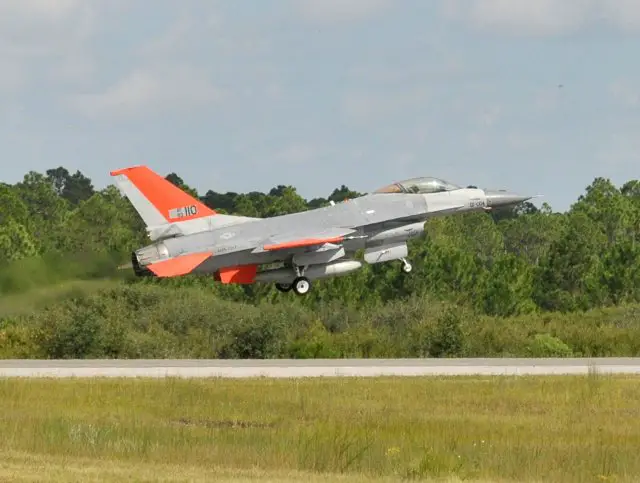
The USAF's Tyndall Air Force Aerial Target Division has a new target. Since March 11, the division has access to the QF-16, an unmanned F-16 it will use in exercises with its F-22 squadron. The QF-16s are based at the 96th Test Wing at Eglin Air Force Base, but some are being sent to the 82nd Aerial Targets Squadron, a geographically separated unit of the 53rd Wing, headquartered at Eglin.
Tyndall AFB's QF-16 full-scale aerial target
Tyndall eventually will receive 13 QF-16s, which can be operated by a pilot or as a drone. Tyndall still is using the QF-4 in training, but the QF-16 will replace the QF-4, an unmanned McDonnell Douglas F-4 Phantom II, as the next-generation aerial target. While the F-4 is still in service by Middle Eastern air forces, such as Iran as recently as December, the F-16 provides a next-generation fighter jet. “It’s a more nimble aircraft,” Tyndall Public Affairs Officer Chris Bowyer-Meeder said. The Tyndall Aerial Target Division will, from time to time, shoot down its target jets, Bowyer-Meeder said. However, the planes also are equipped with sensors to register a hit in training. “Today culminates five years of hard work and dedication beginning with a development program, completing a rigorous test and evaluation phase that has ultimately led to the first operational delivery of the QF-16,” said Michele Hafers, director, test and training division at Eglin AFB.
The first QF-16 was delivered to Tyndall in November 2012 for operational and developmental testing to ensure their viability for aerial targets. The QF-16 is a supersonic reusable full-scale aerial target modified from an F-16 Fighting Falcon. The emergence of U.S. 5th generation fighters such as the F-22 Raptor and the F-35 Lightning II means American forces need an advanced target similar to what they would actually find on the battle field.
Военные могут в несколько раз сократить план закупок истребителя пятого поколения Т-50, предусмотренный Госпрограммой вооружений на период до 2020 года (ГПВ-2020). Об этом пишет «Коммерсантъ» со ссылкой на источник в военном ведомстве.
«Есть понимание, что для начала нами будет подписан контракт на эскадрилью Т-50 (12 машин — прим. Flight Club). После этого решим, сколько их еще необходимо и сколько мы можем себе позволить», — заявил источник.
До последнего времени, по словам собеседника издания, ГПВ-2020 предусматривала закупку 52 серийных истребителей Т-50. «Мы даже прописали график поставок. В период 2016-2018 годов российские ВВС должны были получать по восемь истребителей ежегодно, а в 2019-2020-м — уже по 14 самолетов данного типа», — рассказал источник.
По его словам, причиной резкого сокращения закупок Т-50 стали экономические трудности, возникшие в стране.
Ранее замглавы Минобороны Юрий Борисов сообщил, что «в новых экономических условиях» первоначальные планы по закупке Т-50 могут быть скорректированы. «Лучше нам иметь задел в виде ПАК ФА и возможность потом продвинуться вперед, до конца выжав все возможности из истребителей поколения 4+», — подчеркнул Борисов.
Истребитель пятого поколения Т-50, создаваемый в ОКБ Сухого по программе «Перспективный авиационный комплекс фронтовой авиации» (ПАК ФА), впервые поднялся в небо в 2010 году. С февраля 2014-го истребитель проходит программу государственных совместных испытаний. В данный момент количество летных экземпляров достигло пяти машин, в 2015 году к ним присоединятся еще три. Серийные поставки самолета в войска должны начаться в 2016-м.
Sharing a private aircraft with 6-7 other people can be a quick way to get from A-B and a way of generating new business at the same time, by networking in the sky. A number of new Business Jet companies have embraced today’s new disruptive technologies and bringing private jet travel to a whole new group of people.
JetSmarter
Launched in March 2013, JetSmarter is essentially a cross between a tech company, travel agent, and airline – and aims to bring private jet travel to the masses.
With already 200,000 active users it is well on track to achieve that.
For booking private charter flights, the process is simple…
JetSmarter is an App and, just like booking a regular flight, enter your departure and arrival cities, plus the date and time of travel.
With 3,200 private jets in its fleet, available at any time, JetSmarter and its independent partners display the schedules and locations of the jets through the App. Users can request flights from anywhere in the world, and as close as six hours before departure.
Plus, just as Uber allows you to choose what car you want – be it a regular sedan, limo, or larger vehicle – JetSmarter offers flyers the same flexibility, depending on their needs. Users can see photos of the planes, plus the interior layout and amenities on board.
JetSmarter doesn’t actually own these planes; they belong to its charter firm partners – who are also responsible for maintenance, inspections, and pilots. JetSmarter is essentially the middle man that facilitates the travel part.
So for all of JetSmarter’s comparisons to Uber, there’s a big difference between a company that generates roughly $30 million per year from three to four bookings per day, and the multi-billion-dollar valuation behind Uber – a company that makes $30 million per week from roughly one million rides.
JetSmarter’s founder and CEO, Sergey Petrossov wants to make it the “Uber of the sky,” and knows that prices need to be driven down to meet this goal.
JetSmarter draws inspiration from another disruptive tech company – eBay . It functions like an online auction site.
For example, let’s say a husband and wife charter a JetSmarter private jet from Logan Airport in Boston to Nantucket Island for a quick getaway. But for their trip home, the couple won’t need the jet.
Nevertheless, JetSmarter’s plane will still need to leave Nantucket, whether the couple is on board or not. So the company will send push notifications to JetSmarter members in the Nantucket area who need a flight, and let them bid for it at a steep discount. That’s much better than the plane leaving Nantucket empty, and gives JetSmarter revenue it otherwise wouldn’t have made.
There’s another way that JetSmarter is going after ordinary folks…
Got No Friends? Share a Jet.
All the planes in JetSmarter’s private fleet come with multiple seats – around seven or eight. So that $4,000 flight from New York to Dulles is a lot more affordable if it’s split between a group of friends, or business colleagues traveling together.
But what about people flying solo?
Petrossov has them covered through the next leg of its business – “jet sharing.”
Let’s say John and Jane charter a private jet from New York to Los Angeles for $6,000. However, the jet they’re flying on has eight seats, leaving six available.
With jet sharing, John and Jane can sell those seats to someone else – in this case, $750 each.
I just pulled up tickets for a United Airlines economy flight from JFK to LAX, and got the following rates…
Lowest Fare (Non-refundable): $636.
Flexible Fare (Refundable): $757.
First Class: $1,064.
Keep in mind, that doesn’t include baggage fees, in-flight Wi-Fi, or any other “convenience” charges.
As you can see, the United flight saves you $114. But that’s for an economy flight that comes at the cost of luxury. Instead of flying in a private jet, you’ll be stuffed into a middle seat with screaming children, or an obese man spilling into your seat, and a chair reclining into your lap. But hey… it’s only a six-hour flight!
Petrossov’s goal with jet sharing is to make private jet travel more affordable – and thus, open it up to the masses. In doing so, it offers competition to the commercial airline industry – and makes JetSmarter as disruptive to commercial airlines as Uber is to cabs.
Surf Air
Surf Air’s business model is slightly different. For a flat monthly fee, subscribers are able to take unlimited flights. The company currently own and operate 7 Swiss built single-engine turboprop Pilatus PC-12 aircraft. In August 2014, Surf Air raised $8 million in new equity funding and secured a $65 million loan to place a five-year order for 15 new Pilatus PC-12 planes, with an option to buy 50 more over that timespan.
The airline's inaugural service in early 2013 offered West Coast flights between Silicon Valley (San Carlos Airport) and the Los Angeles area (Burbank Airport). In July 2013, it added L.A.-area service to Santa Barbara Airport as well.
In December 2013, Surf Air added service to a second Los Angeles stop, Hawthorne Municipal Airport, which is adjacent to LAX. In May 2014, Truckee Airport, near Lake Tahoe, was added as a destination. The airline also offers weekend flights to Las Vegas (McCarran International Airport) from its Los Angeles destinations through a partnership with other airlines.
Flights to Carlsbad, California and Oakland, California started on November 18 and December 15, 2014. This pushed Surf Air's capacity up from 28 to 48 flights per day as of November 2014. The company says it plans to expand service to the California cities of Santa Ana, Sacramento, San Diego, Monterey, Palm Springs, Sonoma, Mammoth Lakes, San Jose, Bakersfield, San Luis Obispo and Scottsdale.
The airline's co-founder and CEO Wade Eyerly boasts that Surf Air offers frequent commuters a corporate jet experience for not that much more than regular airline prices.
Surf Air’s general aviation facility is on the far side of the Burbank Airport in metropolitan Los Angeles. Instead of using big, busy terminals, Surf Air will flies out of smaller, low-key places like this one. No TSA screening is required, so there's no conga line, no emptying your pockets or removing your shoes.
You're about probably 50 feet from the plane as it pulls up, and then the concierge will come get you when it's time to go. The total amount of time from parking your car to getting inside the plane could be less than five minutes. The Swiss-made, eight-passenger turboprop has a single engine and two pilots. The longest flight — between San Francisco and Los Angeles — is just over an hour.
In the beginning Netflix, customers used to be able to order all the DVDs they wanted but could hold only a few of them at a time. With Surf Air, travellers can only have four boarding passes at once.
This keeps any one member from sort of boxing everyone else out from every flight and makes sure there's enough capacity for everyone to be able to book regularly.
Beacon
Former Surf Air CEO Wade Eyerly and his co-founders have started a very similar private flight startup to their last venture. But this time it’s on the East Coast and it’s called Beacon.
Just like Surf Air, the new subscription service offers an unlimited flight membership to select locations from private air carriers. The main difference is in the destinations served. Surf Air currently flies to seven California locations and Las Vegas. Beacon will serve the Northeastern United States, including Boston, the Hamptons, White Plains and Nantucket.
For Eyerly, the launch of Beacon is his second shot at reinventing private air travel. He was forced out from his role at Surf Air close to a year ago and replaced by the more experienced former CEO of Frontier Airlines Jeff Potter.
He says this is a chance to start over with the knowledge he gained building his first unlimited private flight startup. “It’s the innovators that do all the heavy lifting and the imitators that reap the rewards. I’m the first to come up with the all-you-can-fly private flight model and others come to me and my co-founders for advice on disrupting the airline industry. I feel I can take all the trials and experience I gained at Surf Air to making a successful company here.” said Eyerly.
Part of what he learned will be applied in adapting the business model to make it more efficient. Surf Air operates its own private planes, but Beacon does not. Instead, it operates by hooking members up with private air carriers owned and operated by those holding the necessary government authorization to fly.
Owning its own planes caused Surf Air to hit an 18-month roadblock in the early days of operations. The issue surrounded gaining the necessary licensing from the FAA for its private flight service.
The new model allows Beacon to operate without having to go through the same initial struggles. “It’s like Delta partnering with SkyWest. We’re doing that with private carriers who already have the license to fly,” explained Eyerly.
Beacon will fly to the aforementioned four locations starting this Summer, but it could easily expand with partnership deals in the more than 1500 privately owned charter jet companies throughout the United States.
Eyerly hinted this was on the roadmap with plans to expand into D.C. next. “There is a lot of travel to and from the Northeast and D.C. It’s the natural next step,” he said.
Eyerly will most likely face some backlash from his former startup over the new endeavor. Though on opposites sides of the country, the two are very similar. Eyerly maintains this won’t be an issue because he never signed a non-compete.
He also still owns part of the company he started with his brother David in 2012. “I don’t think this will be a big deal. I have a reason to want Surf Air to do well. I own stock in the company and so do my co-founders,” Eyerly said.
Eyerly brought in former Mitt Romney campaign finance director Ryan Morely as well as his former Surf Air co-founders Cory Cozzens and Reed Farnsworth to work with him at Beacon.
The new travel startup has also nabbed an undisclosed amount of funding from Boston-based Romulus Capital and a host of angel investors, including New York Times bestselling author of “Never Eat Alone” Keith Ferrazzi and former NBA basketball player Danny Ainge.
Beacon passengers will pay $2000 per month for unlimited flights on a maximum 10 passenger air craft. (Surf Air costs $1750 per month.) Concierge services such as car rentals, drinks and even flowers will also be provided at each private air terminal where Beacon operates.
Applying these new disruptive technologies to private jet travel is bringing more people to experience this way of travelling by air. While jet sharing doesn't offer all the flexibility of chartering and/or jet ownership, it is another stepping stone in that direction.

 facebook.com/merkieva
 facebook.com/merkieva
 facebook.com/merkieva










 Tyndall AFB's QF-16 full-scale aerial target