Показаны сообщения с ярлыком Россия. Показать все сообщения

вторник, 31 марта 2015 г.

Війна дронів на Донбасі


Від початку конфлікту на сході України обидві сторони протистояння використовують безпілотники для спостереження за силами противника та розвідки.
Кореспонденти ВВС Наталя Антелава та Абдужаліл Абдурасулов поспілкувалися із бійцями українського добровольчого батальйону під Донецьком та побачили, як відбувається запуск українських дронів.
Кореспонденти відзначають, що через брак ресурсів більшість таких апаратів добровольці роблять власноруч.

воскресенье, 29 марта 2015 г.

Drive from Europe to the U.S.? Russia proposes world's greatest superhighway

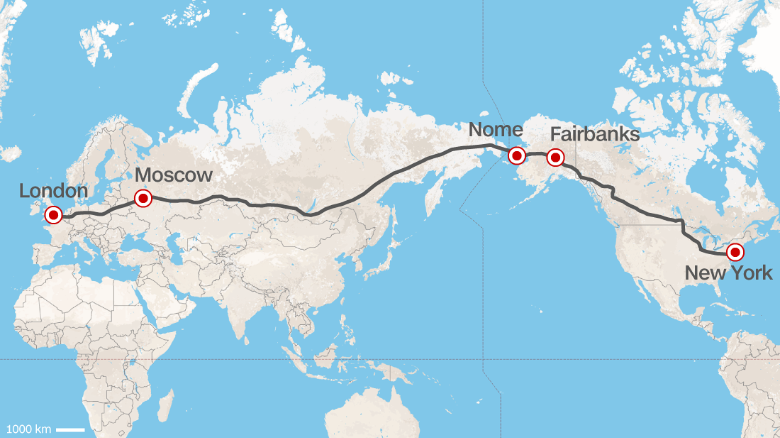
Route as roughly interpreted by CNN. The proposed plan for a massive trans-Siberian highway would link Russia's eastern border with the U.S. state of Alaska.
It could happen if the head of Russian Railways has his way.
According to a March 23 report in The Siberian Times, Russian Railways president Vladimir Yakunin has proposed a plan for a massive trans-Siberian highway that would link his country's eastern border with the U.S. state of Alaska, crossing a narrow stretch of the Bering Sea that separates Asia and North America.
The scheme was unveiled at a meeting of the Moscow-based Russian Academy of Science.
Dubbed the Trans-Eurasian Belt Development (TEPR), the project calls for a major roadway to be constructed alongside the existing Trans-Siberian Railway, along with a new train network and oil and gas pipelines.
"This is an inter-state, inter-civilization, project," the Siberian Times quoted Yakunin. "The project should be turned into a world 'future zone,' and it must be based on leading, not catching, technologies."

    "Are we there yet?"

    The road would run across the entirety of Russia, linking with existing road systems in Western Europe and Asia.
    The distance between Russia's western and eastern borders is roughly 10,000 kilometers (6,200 miles).
    Yakunin said the road would connect Russia with North America via Russia's far eastern Chukotka region, across the Bering Strait and into Alaska's Seward Peninsula.
    The road would likely enter Alaska some distance north of the town of Nome, where the famed Iditarod sled dog race ends.
    How would drivers span the ocean gap between Siberia and Alaska? Ferry? Tunnel? Bridges?
    The report didn't offer specifics on the route across the sea.
    The shortest distance between mainland Russia and mainland Alaska is approximately 88 kilometers (55 miles), according to the Alaska Public Lands Information Centers.
    The main route of the Trans-Siberian railway runs from Moscow to Vladivostok and covers 9,258 kilometers.
    A theoretical drive (as fancifully calculated by CNN) from London to Alaska via Moscow might cover about 12,978 kilometers (8,064 miles).
    Relatively isolated even by Alaska standards, no road connects Nome with the rest of the state's road system.
    About 836 road-less kilometers (520 miles) across desolate terrain separates Nome from the closest major city and road network in Fairbanks, the unofficial northern terminus of the Alaska Highway.
    From Fairbanks, Canada and the 48 contiguous U.S. states can be reached by road.
    Assuming a road to Nome were ever built (the idea has been studied by the state of Alaska), a fantasy road trip from London to New York might cover a grueling but presumably photo-op-laden 20,777 kilometers (12,910 miles).
    Facebook posts from forlorn Siberian rest stops might alone make the trip worthwhile, though the journey would also easily establish irritating new records for "Are we there yet?" gripes from the kids.

    Who's gonna pay for this thing?

    Yakunin has been described as a close friend of Russian President Vladimir Putin.
    Some sources have speculated that he could be Putin's likely successor as president.
    TEPR would reportedly cost "trillions of dollars."
    According to Yakunin, however, massive economic returns would more than make up for the massive cash outlay -- about which the report also included no details.

    суббота, 28 марта 2015 г.

    Astronauts Scott Kelly, Mikhail Kornienko begin year in space

    Scientists to learn more how living in microgravity environment 

    affects human body

    Scott Kelly and Mikhail Kornienko began their marathon mission with a Soyuz rocket launch from Kazakhstan.
    Scott Kelly and Mikhail Kornienko began their marathon mission with a Soyuz rocket launch from Kazakhstan. (Bill Stafford/NASA)


    Two Russians and an American floated into the International Space Station on Saturday, beginning what is to be a year away from Earth for two of them.
    Mikhail Kornienko and Scott Kelly are to spend 342 days aboard the orbiting laboratory, about twice as long as a standard mission on the station. Russia's Gennady Padalka is beginning a six-month stay.
    The three astronauts entered the station about eight hours after launching from Russia's manned space facility in Kazakhstan. They were embraced by American Terry Virts and Russia's Anton Shkaplerov who along with Italian Samantha Cristoforetti have been aboard since late November.
    The trip is NASA's first attempt at a one-year spaceflight; four Russians have spent a year or more in space, all on the Soviet-built Mir space station.

    Preparing for mission to Mars

    The stay is aimed at measuring the effects of a prolonged period of weightlessness on the human body, a step toward possible missions to Mars or beyond.
    Kelly's identical twin Mark, a retired astronaut, agreed to take part in many of the same medical experiments as his orbiting sibling to help scientists see how a body in space compares with its genetic double on Earth. They are 51.
    APTOPIX Kazakhstan Russia Space
    The Soyuz-FG rocket, carrying a new crew to the International Space Station, blasts off at the Russian-leased Baikonur cosmodrome in Kazakhstan, on Friday, March 28, 2015. The Russian rocket was carrying U.S. astronaut Scott Kelly, Russian cosmonauts Gennady Padalka, and Mikhail Korniyenko. (Dmitry Lovetsky/AP)
    Kelly and Kornienko, 54, will remain on board until next March. During that time, they will undergo extensive medical experiments, and prepare the station for the anticipated 2017 arrival of new U.S. commercial crew capsules. That means a series of spacewalks for Kelly, which will be his first.
    The two men also will oversee the comings and goings of numerous cargo ships, as well as other Russian-launched space crews and an expected September visit from singer Sarah Brightman on a "space tourist" trip.
    Doctors are eager to learn what happens to Kelly and Kornienko once they surpass the usual six-month stay for space station residents.
    Scientists already know about certain physiological effects possible with those missions. They include:
    • Exposure to radiation.
    • Weakening bones and muscles.
    • Changes to immunity.
    • Pressure on the brain and eyes.
    Bones and muscles weaken because of weightlessness. Body fluids shift into the head when gravity is absent, putting pressure on the brain and the eyes, impairing vision for some astronauts in space.
    SPACE-STATION
    NASA astronaut Scott Kelly walks after donning his space suit at the Baikonur cosmodrome on Friday, before blasting off in the Soyuz TMA-16M spacecraft from Kazakhstan. (Maxim Zmeyev/Reuters)
    The yearlong stint will allow doctors to assess whether such conditions are aggravated by a long spell in space or whether they reach a point of stasis or even taper off.
    As space officials look to longer missions, the International Space Station's future appears ensured until at least 2024.
    Last year, as tensions between Russia and the United States grew amid the dispute over Russia's role in Ukraine, Deputy Prime Minister Dmitry Rogozin had said Moscow aimed to exit the project in 2020.
    But Russian space agency director Igor Komarov told a post-launch news conference in Baikonur that his agency and NASA have agreed to continue using the station until 2024.
    In addition, "Roscosmos and NASA will work on a program for a future orbiting station. We will think about discuss joint projects," he said. Just last month, Roscosmos said it foresaw creating a Russian station for use after 2024.
    NASA has never flown anyone longer than seven consecutive months. The Russians hold the world record of 14 months in space, set by Valery Polyakov aboard the former Mir space station in 1994-95. Several other Russians spent between eight and 12 months at Mir. All but one of those long-timers are still alive.

    Emotional impact of living in space

    A year in space will carry not only physical challenges, but emotional ones as well.
    A day before the launch, Kornienko said he would long for the sights of nature. Even on his mission in 2010, which was half as long, he said he had asked to be sent a calendar with photos of rivers and woods.
    Kelly said he thought one of the biggest challenges would be to pace himself mentally so he could remain energetic during the year aboard the laboratory.
    But he joked that he wouldn't miss his sibling.
    "I've gone longer without seeing him, and it was great," he said.

    Как сделать ракету из чайного пакетика?

    Для этого простого, но эффектного трюка нужно отрезать верхушку чайного пакетика и высыпать из него заварку. Если поджечь такую ракету, она взлетит благодаря восходящему потоку теплого воздуха.
    Несмотря на то, что данный фокус иллюстрирует вполне серьёзное физическое явление, мы не можем не проиллюстрировать его «бородатым» анекдотом от Юрия Никулина.
    Прилетели на Луну русские и американцы. У русских сломалась ракета и они обратились к американцам:
    — Можно на вашей ракете на Землю вернуться?
    — Нет, конечно! В ракете место только для нас!
    — А купить вашу ракету можно?
    — Вы что? Как купить? 100 миллиардов долларов!
    — А можно часть ракеты?
    — Какую часть?
    Тут берется пакетик с чаем и палец указывает на картонку:
    — Вот это что?
    — Это кабина!
    — Не нужна!
    Картонка отрывается от веревочки. Указывает на веревочку:
    — А это что?
    — Это самый главный кабель!
    — Не нужен!
    Веревочка отрывается. Указывает на чай в пакетике:
    — А это что?
    — Это топливо!
    — Не нужно!
    Пакетик разрывается и чай высыпается. Остается сам пакетик.
    — А это что?
    — Это топливный бак!
    — Вот на нем мы и полетим!
    — Как же вы на нем полетите?
    — А вот так!
    Пакетик поджигается и… уносится в воздух.

    пятница, 27 марта 2015 г.

    Вертолет Ми-28НЭ — летучий антитанк круглосуточного действия

    Как хорошо, что на каждый танк с нарезкой находится что-нибудь с винтом! Например, Ми-28НЭ — гроза любой ползучей техники.
    Ми-28НЭ
    Ми-28НЭ разработан в ОКБ им. Миля и предназначен для поиска и уничтожения танков и других бронированных интервентов, а также малоскоростных воздушных целей (опрометчивых вражеских вертолетов, БПЛА и прочего). Не говоря уже о хрупких солдатах из обычного мяса. Вертолет может уничтожать все это в любых погодных условиях и даже в полной темноте.
    Здесь Ми-28Н «Ночной охотник» позирует с собратьями по гнезду — Ка-52 «Аллигатор» и Ми-8.
    Боевые вертолеты чаще всего сбиваются наземными средствами ПВО при визуальном контакте. Иными словами, пока противник тебя не видит, ты в относительной безопасности. Ради маскировки вертолет должен все время летать на малой высоте, прячась в складках местности, маскируясь на лесных опушках и в руслах рек. Но вблизи земли значительно труднее пилотировать аппарат: в любую минуту может перед носом оказаться препятствие. В Ми-28НЭ в таких ситуациях пилоту помогает автоматизированная система управления, значительно снижающая нагрузку на него при огибании земного рельефа. При большом желании вертолет можно пилотировать даже в пещере, если вдруг враги засядут там.
    ТТХ Ми-28Н

    Впрочем, если потребуется воевать на высоте, Ми-28НЭ тоже не подведет. На нем можно выполнять почти весь комплекс фигур высшего пилотажа, даже пресловутую «мертвую петлю». Специфические вертолетные фигуры («бочки» и перевороты с разворотом) позволяют летчику быстро уходить от противника, срывая захват головок самонаведения его ракет, или самому столь же быстро нацеливать на него оружие. При маневрах достигаются перегрузки в 3g. В мире не много вертолетов, которые способны такое выдержать, но для Ми-28НЭ это считается нормальной рабочей величиной.
    Ми-28 в разрезе

    Пока пилот управляет верткой штучкой, его коллега — оператор вооружения — вплотную занимается уничтожением цели. В этом ему помогает оптико-электронная система ГОЭС-520, а иногда и надвтулочная РЛС «Арбалет». Эта РЛС называется так потому, что установлена на самой высокой точке машины — над втулкой воздушного винта. Так что Ми-28НЭ может, оставаясь в засаде за лесом или холмом, выставить лишь «прицел», не показываясь врагу целиком. РЛС осуществит поиск целей, оператор отсортирует их по степени опасности и важности, а потом вертолет мгновенно «выпрыгнет» и расстреляет разведанные объекты управляемыми ракетами.
    Вертолет Ми-28

    Сверхзвуковая высокоточная ракета «Атака-В», идущая в комплекте с вертолетом, имеет радиокомандную систему наведения повышенной помехозащищенности, которая, в отличие от лазерных систем наведения, легко находит цели в пелене дыма, пыли, при сильном тумане или в условиях поставленной противником защитной аэрозольной завесы.

    Конкуренты

    При всей своей маневренности Ми-28НЭ не самый мощный и не самый быстрый.
    США
    McDonnell Douglas AH-64D Apache Longbow, США
    McDonnell Douglas AH-64D Apache Longbow, США
    Боевая нагрузка 771 кг на 4 узлах подвески
    Двигатели 2 х ГТД General Electric T700-GE-701C мощностью по 1950 л. с.
    Скорость, max 276 км/ч
    Cкороподъемность, max 13 м/с
    Практический потолок 4465 м
    Дальность полета 480 км
    Вооружение 30-мм пушка M230 Chain Gun, 16 ПТУР AGM-114D Longbow Hellfire или 4 ПУ М260
    Экипаж 2 человека
    Италия
    AW129, Италия
    AW129, Италия

    Боевая нагрузка 1200 кг на 4 узлах подвески
    Двигатели 2 х ГТД LHTEC-T800 мощностью по 1335 л. с.
    Скорость, max 278 км/ч
    Скороподъемность, max 4,6 м/с
    Практический потолок 6500 м
    Дальность полета 561 км
    Вооружение 8 УР Hellfire, или TOW-2, 76 70-мм НУРС, или 38 81-мм НУРС, или 4–8 ракет Stinger
    Экипаж 2 человека

    США
    AH-1W / AH-1Z Super Cobra, США
    AH-1W / AH-1Z Super Cobra, США

    Боевая нагрузка 1775 кг на 4 узлах подвески
    Двигатели 2 х ГТД General Electric T700-GE-401 мощностью по 1640 л. с.
    Скорость, max 389 км/ч
    Скороподъемность, max 8,8 м/с
    Практический потолок 5500 м
    Дальность полета 1500 км
    Длина 13,9 м
    Общая высота 4,02 м
    Вооружение 20-мм трехствольная пушка M197 Vulcan; 8 ПТУР BGM-71 TOW и т. п.
    Экипаж 2 человека

    На пределе. Планер.

    За счет чего планер поднимается в воздух? Сколько нужно времени, чтобы научиться управлять этим летательным аппаратом?


    How Russia's 'troll factory' pumps out online propaganda

    Russian blogger Marat Burkhard told Radio Free Europe that working in an infamous "troll factory" generating fake internet posts and comments was "Orwellian." "Whatever we're told, that's what we'll write about, no questions asked, and we don't want to know." Using the word "absurd" no less than five times, he detailed how a typical day went at "Internet Research," a company run by a Vladimir Putin crony. The team of around 300 employees reportedly puts out about 30,000 pro-Kremlin comments a day from fake accounts on Twitter, Facebook and websites like the New York Times. Burkhard took the job because it was an "adventure" and pays considerably more than a professional journalist makes in the nation.
    Burkhard said the he worked with two other trolls, with one the "villain" who criticizes Russian authorities, and the other two defending the government. The team would create fake comments on Russian news posts (often written by other trolls at Internet Research). The exact text didn't matter, but they were required to stuff comments with keywords like "defense minister" and "Russian army" to improve a post's search rankings. One individual was tasked with adding "demotivators," or troll-style pictures that undermine the villain's points, while the other would post links and counter-arguments.
    Translation: Ukraine, rise up! Southeast, sit down, don't make a fuss.
    A typical assignment would be to comment on an article like this, which claims that western soldiers are embedded into a troop of Ukrainian "neo-fascists." First, the villain complains that "Russia as usual blames Ukraine for the things it's doing itself" to set up the faux debate. A second troll then links to a similar report and says "you should know how much evidence has already been provided that... the West and (Ukrainian President) Poroshenko are reluctant to pursue peace." Then, the picture troll drops in a demotivator (above) implying that a Ukrainian region is pro-Russian.
    On top of spamming local journals and social media, the operation also targets western sites like CNN and the BBC and even has "special people working on Facebook," according to Burkhard. Employees in those department reportedly make even more money, even though most are "barely capable of formulating what's important about these stories." He said he eventually quit "because I can't engage in absurd work," adding employees are "constantly under threat of being fired." Despite the absurdity, however, he added that the trolling worked: "everyone kind of believes in this truth... it's Orwell." You can read the entire interview here.

    четверг, 26 марта 2015 г.

    10 признаков, что ты смотришь пропаганду по рашистским каналам


    1
    Тебе за шестьдесят, и сейчас девять часов вечера.


    2
    Навальный должен прекратить войну в Украине, которую он развязал!


    3
    Ты все тверже и тверже убеждаешься, что девальвация рубля — это круто.


    4
    А ведь каких-то три года назад Обама был тебе чем-то даже симпатичен!


    5
    Однажды ты смотрел новости пьяным, и жена чудом удержала тебя, когда ты на ночь глядя засобирался в ополчение...
    Ты смотришь пропаганду по рашистским каналам


    6
    В твоем доме уже второй год нет горячей воды, но ты рад, что живешь не в США.


    7
    Ты согласно киваешь, услышав из уст Киселева что-нибудь вроде: «Этому нет доказательств, но ведь факты и не требуют доказательств!»


    8
    Ты ждешь новости спорта, потому что там наверняка ничего не будет про Украину.


    9
    Ты испытываешь снисходительную брезгливость к европейским лидерам.


    10
    У тебя ощущение, что с экрана тебя все время уговаривают.

    среда, 25 марта 2015 г.

    In Global Exports, Smaller Nations Seek Edge

    Widespread growth in global arms exports may point to heightened competition for sales in the future as more countries develop increasingly sophisticated defense industries, analysts said.
    The US and Russia remain the dominant sellers, accounting for more than half of global sales between 2010 and 2014, according to figures released last week by the Stockholm International Peace Research Institute (SIPRI). But other countries are driving the overall growth in arms exports, which grew by 16 percent globally compared with the period between 2005 and 2009, analysts said.
    "There is competition coming from other parts of the world now. China is the most visible [example], but increasingly you have capabilities being developed in other parts of the world," said Jon Barney, managing director at Avascent, a strategy and management consulting firm. "It's a rising tide, and it's game-changing across the sector."
    After the US, Russia and China, European countries — Germany, France, the UK, Spain, Italy and Ukraine — and Israel round out the top 10 arms exporters. China experienced the largest growth in exports, up 143 percent from the previous period, while Germany's exports dropped by 43 percent, dropping it out of third place.
    Traditionally, China has produced very low-cost, low-tech systems, often copied from Russian models, said Philip Finnegan, director of corporate analysis at Teal Group. At a time when US defense spending has been relatively flat, China's defense budget has grown, and the investment is beginning to pay dividends, he said.
    "They're coming up, they're really moving up the value chain and sophistication level," Finnegan said.

    Closing the technology gap with the US to produce higher quality products is one way that emerging producers are making themselves more attractive to buyers. Sellers in the same region may be more convenient, and buying from countries besides the US and Russia often comes without the geopolitical and ideological strings attached.
    And even traditional alliances may become less influential in the future, said Remy Nathan, vice president of international affairs at the Aerospace Industries Association.
    "There are certain things that are just unlikely to occur," such as the UK buying a Chinese military system, Nathan said. "But having said that, I'm not taking it for granted that traditional customers of US systems are going to remain those customers."
    The market — the countries that need things, their ability to afford them, their desire to buy them — is changing, Nathan said. A program that is 80 percent effective but costs a fraction of one that is 90 or 95 percent effective will often win out, he said.
    Countries not in the top 10 are building up their programs by developing niche products, Finnegan said. For example, Turkey has made strides with its Anka UAV, a medium-altitude/long-endurance vehicle under development by Turkish Aerospace Industries. The KC-390, a twin-engine cargo plane manufactured by Brazil's Embraer, may someday provide competition for American made C-130s.
    "There's an ambition to develop broad industry, but it tends to be a niche approach," he said.
    Analysts said that while the US, Russia and China are likely to remain the top three exporters, European countries are the most vulnerable to lose their market share to the emerging upstarts.
    Byron Callan, a defense market analyst with Capital Alpha Partners, said that restrained defense budgets for European producers, including the UK, Germany, Spain and Italy, have hurt their prospects.
    "They've kind of starved their industry of research and development, and it's not clear how commercially competitive some of their next generation stuff is," he said. "They show up on this list right now, but if they're people who get bumped, it's going to be continental European countries."
    But it's hard to look back at sales figures and see what disruptions and perceptions of political instability will affect the market in the future, Callan said.
    "Some of the most disruptive things that are happening aren't coming from anybody on that list," he said. Non-state actors such as Boko Haram and the Islamic State can cause mayhem with light infantry weapons.
    "The instability isn't coming from main battle tanks and advanced aircraft, but groups that can get their hands on large stocks of weapons and ammunition," Callan said.

    Швеция сообщает о полетах военных самолетов РФ над Балтикой

    Шведские военные сообщили о том, что российские военные самолеты были замечены в районе шведского острова Готланд и датского острова Борнхольм.
    По их данным, самолеты – два бомбардировщика Ту-22 и два истребителя Су-27 пролетели во вторник утром в международном воздушном пространстве над Балтикой с выключенными транспондерами.
    «Впервые за многие годы мы наблюдали над Балтикой самолеты такого типа», – сообщил заместитель оперативного командующего ВВС Швеции Андерс Гренстад.
    «Угроза в отношении Швеции не возросла, но вооруженные силы страны наблюдают за возросшей активностью в этом регионе», – прокомментировал ситуацию представитель шведской армии Йоран Мартенссон.
    По словам министра обороны Швеции Петера Хульквиста, «россияне не нарушали правил, поскольку летали в международном воздушном пространстве, но полеты без включенных транспондеров – это неподобающее поведение».
    В свою очередь глава МИД Швеции Маргот Вальстрем заявила, что полеты российских самолетов с выключенными транспондерами неприемлемы, назвав это нарушением международных авиационных правил
    «Это случалось неоднократно, и это вызывающе. Мы устали выражать протесты против такого нарушения правил», – добавила министр.

    вторник, 24 марта 2015 г.

    «Коммерсантъ» узнал о сокращении плана закупок истребителей пятого поколения

    Военные могут в несколько раз сократить план закупок истребителя пятого поколения Т-50, предусмотренный Госпрограммой вооружений на период до 2020 года (ГПВ-2020). Об этом пишет «Коммерсантъ» со ссылкой на источник в военном ведомстве.
    «Есть понимание, что для начала нами будет подписан контракт на эскадрилью Т-50 (12 машин — прим. Flight Club). После этого решим, сколько их еще необходимо и сколько мы можем себе позволить», — заявил источник.
    До последнего времени, по словам собеседника издания, ГПВ-2020 предусматривала закупку 52 серийных истребителей Т-50. «Мы даже прописали график поставок. В период 2016-2018 годов российские ВВС должны были получать по восемь истребителей ежегодно, а в 2019-2020-м — уже по 14 самолетов данного типа», — рассказал источник.
    По его словам, причиной резкого сокращения закупок Т-50 стали экономические трудности, возникшие в стране.
    Ранее замглавы Минобороны Юрий Борисов сообщил, что «в новых экономических условиях» первоначальные планы по закупке Т-50 могут быть скорректированы. «Лучше нам иметь задел в виде ПАК ФА и возможность потом продвинуться вперед, до конца выжав все возможности из истребителей поколения 4+», — подчеркнул Борисов.
    Истребитель пятого поколения Т-50, создаваемый в ОКБ Сухого по программе «Перспективный авиационный комплекс фронтовой авиации» (ПАК ФА), впервые поднялся в небо в 2010 году. С февраля 2014-го истребитель проходит программу государственных совместных испытаний. В данный момент количество летных экземпляров достигло пяти машин, в 2015 году к ним присоединятся еще три. Серийные поставки самолета в войска должны начаться в 2016-м.

    На Камчатке разбился вертолёт МИ-2

    Фото РИА Новости
    На Камчатке разбился вертолёт МИ-2. Его обломки обнаружены с воздуха, сообщили «Русской службе новостей» в пресс-службе ГУ МЧС России.
    Предположительно, судно принадлежало одному из спортклубов, на его борту могли находиться несколько человек, скорее всего, все они погибли.
    В район предполагаемого происшествия готовится вылететь вертолёт Хабаровского авиационного спасательного центра МЧС России МИ-8 со спасателями на борту.

    воскресенье, 22 марта 2015 г.

    Launch Pad Animals, Ranked

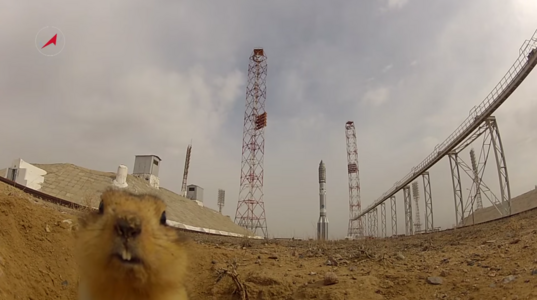
    Baikonur Gopher lives in Kazakhstan and builds tunnels under the steppe. Baikonur Gopher is intensely curious, and wants to know why someone left a perfectly nice GoPro just sitting in the dirt. Baikonur Gopher is not particularly concerned with the rail lines leading to the massive Proton rocket in the background, even when large pieces of equipment roll across said rail lines.

    Baikonur Gopher
    Roscosmos
    I tweeted about Baikonur Gopher, and as of this morning, about 12,000 additional people have met the pleasant little rodent. For comparison, one of my preceding tweets about the Space Launch System was seen by about 200 people.
    Therefore, I must give the masses what they want. I must give them Baikonur Gopher, and all the other creatures that co-inhabit rocket launch sites around the world.  
    Here are your launch pad animals, ranked.

    6. MUOS Turkey Vulture
    MUOS Turkey Vulture was hanging around Space Launch Complex 41, looking for carrion, when an Atlas V rocket had to go and spoil the peace and quiet. Look for MUOS Turkey Vulture in flight near the American flag.
    MUOS Vulture
    Ben Cooper
    MUOS Vulture
    5. Discovery Bat
    This poor bat, which was probably injured before it perched on the side of space shuttle Discovery’s external fuel tank, was last seen clearing the tower at Launch Complex 39A. 
    Discovery bat
    NASA
    Discovery bat
    4. Baikonur Gopher
    We've met Baikonur Gopher already, but it's also worth noting that hanging out near Proton rocket launches can be dicey.
    Baikonur Gopher
    Roscosmos
    Baikonur Gopher
    3. Shuttle alligators
    The alligators seen hanging around Kennedy Space Center aren’t necessarily tied to the shuttle program. But shuttle alligators like a nice, sunny runway, and woe be it to the crew that had to clear them out of the way for orbiter landings.
    Shuttle alligators
    NASA / Ken Thornsley
    Shuttle alligators
    2. Grasshopper Cows
    These Texas cows were grazing in the field, minding their own business, when a reusable rocket technology demonstrator roared to life in their backyard. I bet cows in Oklahoma don’t have to put up with this nonsense.

    SpaceX
    Grasshopper cows
    1. Wallops Frog
    Wallops Frog is the clear winner. It’s one thing to be in the general vicinity of a rocket launch; it’s quite another to climb into the flame trench of a Minotaur rocket. If only we could all leave this world as spectacularly as Wallops Frog, silhouetted against a fiery cloud for one final moment of glory. 

    Wallops Frog
    NASA Wallops Flight Facility / Chris Perry
    Wallops Frog